Zeolite supplements are sold in several forms: raw crushed rock, coarse powder, micronized powder, liquid suspensions, and capsules. Of these terms, ‘micronized’ shows up most often in marketing, but it is frequently used loosely or inconsistently between brands, which makes it hard for a shopper to know what they’re actually paying for.
This article explains what micronization is as a physical process, why particle size matters for a mineral that works through surface contact and ion exchange, and what it does and doesn’t tell you about safety or effectiveness. None of this is medical advice, and the FDA has not evaluated zeolite for any health claim.
Key Takeaways
- Micronization is a milling process that reduces particle size; it does not indicate a chemical change or guarantee purity.
- Smaller particle size plausibly increases surface area for ion-exchange contact, based on the mineral’s known lattice structure, but no published human trial has compared micronized against raw zeolite head to head.
- Contamination risk (heavy metals, radioactivity) depends on the mining source and processing, not on how finely the mineral was later milled.
- A current third-party Certificate of Analysis matters more for safety than whether a product is labeled ‘micronized.’
- Clinical research on clinoptilolite in humans remains limited to small trials on gut and immune markers, not whole-body detox claims.
What 'Micronized' Actually Means
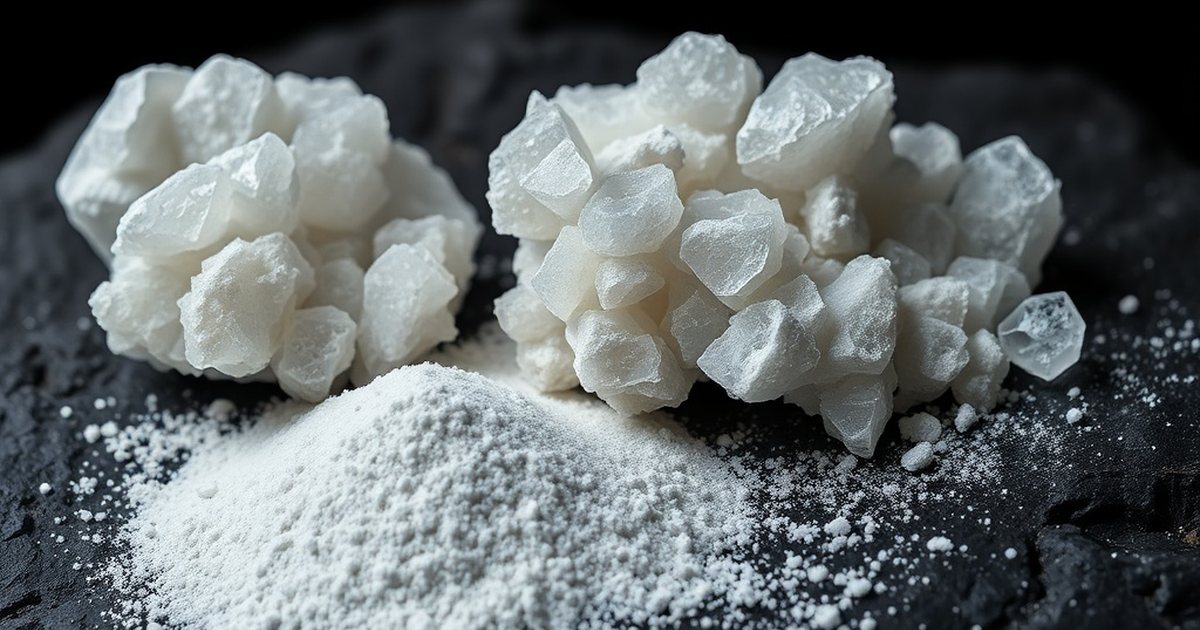
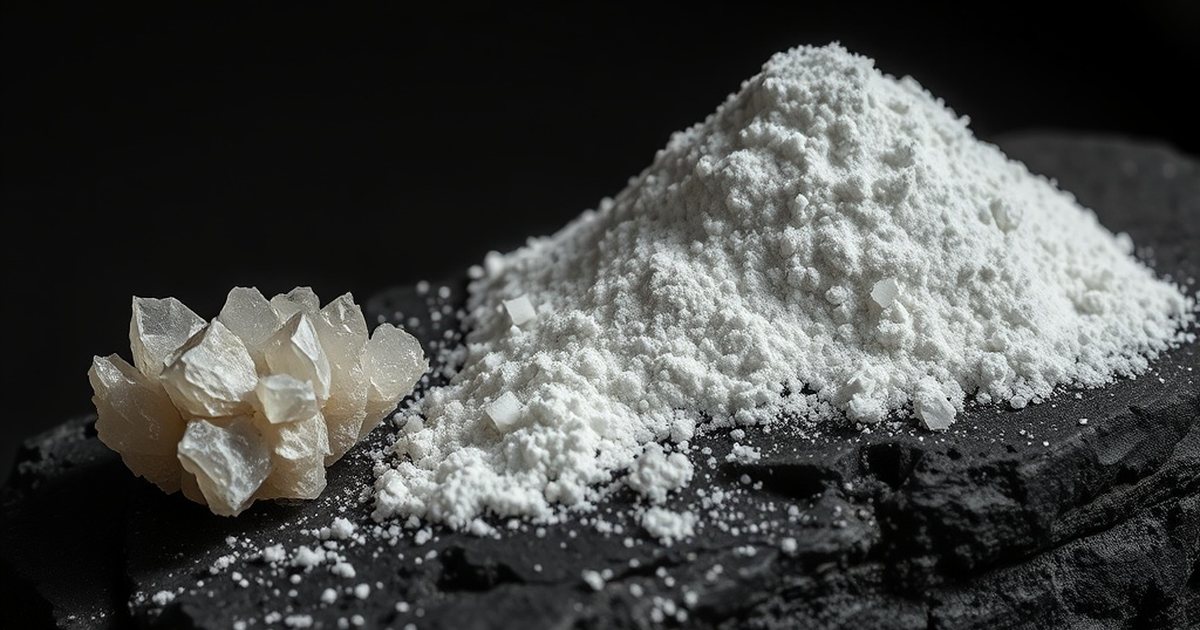
Micronization is a mechanical size-reduction process, typically fine milling, jet milling, or grinding, that takes raw mineral material and breaks it down into a fine, uniform powder, usually with particle sizes in the single-digit-to-low-double-digit micron range. It is a physical processing step, not a chemical change to the mineral itself. Raw zeolite, by contrast, may be sold as crushed rock, chunky granules, or coarsely ground powder that has not gone through this additional refinement.
The term ‘micronized’ has no single regulated definition in the supplement industry the way, say, a pharmaceutical particle-size specification would. Two products both labeled ‘micronized’ can have meaningfully different actual particle sizes, because there is no third-party standard forcing consistency. That is worth knowing before assuming the word itself guarantees quality.
Why Particle Size Matters for a Mineral Like Zeolite
Clinoptilolite’s proposed activity in the gut, binding cations such as ammonium and some heavy metal ions through ion exchange within its cage-like aluminosilicate lattice, depends on surface area and access to the mineral’s internal pore structure. Smaller particles expose more total surface area per gram of material, in principle giving more binding sites in contact with gut contents for a given dose.

This is a plausible mechanistic argument grounded in the mineral’s known structure, but it is a reasoning-from-mechanism claim, not something demonstrated by head-to-head human trials comparing micronized versus raw zeolite outcomes. No such comparison has been published. The one randomized human trial run on an activated and micronized zeolite gave it to 85 smokers over 30 days against vitamin E and an inert control, not against a coarser grind of the same mineral, so it cannot tell you whether the milling step changed anything[1]. Read the surface-area argument as a materials-science rationale rather than a proven clinical advantage.
Micronized Powder vs Liquid Suspension vs Capsules
Micronized dry powder is the base material behind most zeolite products. It can be encapsulated as-is, or further processed into a liquid suspension (sometimes marketed as ‘activated’ or ‘nano’ zeolite) by dispersing very fine particles in water with stabilizers.
Capsules built from micronized powder are generally the most straightforward form to evaluate, since the label can state milligrams of raw material per capsule. Liquid suspensions are harder to evaluate from the label alone, because concentration, particle size within the suspension, and total elemental zeolite content are not always disclosed with the same clarity.
What Micronization Does Not Tell You
A finer particle size does not by itself confirm purity or safety. Because zeolite is a mined mineral, contamination with lead or other heavy metals varies by deposit and by how the ore was processed, independent of how finely it was later milled. A coarsely ground zeolite from a clean, well-tested source can be a safer product than a finely micronized zeolite from an unverified source.
Micronization also says nothing about whether a product has been tested for radioactive elements, which can occur naturally in some zeolite deposits, or whether the manufacturer discloses a current third-party Certificate of Analysis (COA). Particle size, purity, and quality control are three separate questions, and a marketing claim about one does not answer the others.

What the Research Actually Supports
Particle size has been compared head to head, just not in people, and the two studies that did it disagree about which size wins, which is more useful than either would be alone. In a mouse model of colitis, two purified clinoptilolite preparations about tenfold apart in size (3.6 microns versus 0.39 microns) were tested against each other; the finer one worked better and matched the reference drug, and electron microscopy found no clinoptilolite particle in the gut lining, the gut lymph tissue or the liver, which is the direct answer to the worry that grinding a mineral finer makes it absorbable[2]. But in feedlot cattle fed 30 microns against 400 microns clinoptilolite, the finer grind lowered ammonia in the rumen while the coarser grind produced the lower cumulative ammonia emissions from manure; the winner changed with the endpoint being measured[3]. That same cattle study found more potassium and iron leaving in faeces and less calcium in urine, which the authors read as reduced mineral bioavailability, and the same signal shows up in people: across three clinical trials monitored by ICP-MS, copper fell in supplemented osteoporosis patients and sodium and calcium dropped below reference values[4]. So “micronized” is a real physical difference with a real trade-off attached, not a grade of quality, and no human trial has compared processing methods or demonstrated whole-body heavy-metal detoxification by either.
In practical terms, this means claims that micronized zeolite ‘detoxes’ the body more effectively than raw zeolite are marketing extrapolations from a plausible mechanism, not conclusions backed by comparative human trial data.
How to Evaluate a Zeolite Product in Practice
Rather than relying on the word ‘micronized’ alone, look for a current third-party COA showing heavy metal and radioactivity testing specific to that batch or lot, a clearly stated milligram amount of zeolite per serving, and disclosure of the mineral’s geographic source. A reputable seller of either raw or micronized zeolite should be willing to provide this documentation without hesitation.
If a company markets ‘micronized’ or ‘activated’ zeolite heavily but cannot produce recent, batch-specific COA testing, that is a bigger red flag than the processing method itself.

🛒 Where to Buy Zeolite (Clinoptilolite)
- CleanseParasites Heavy Metal + Microplastics Binder Editor’s Pick
Contains zeolite alongside milk thistle, spirulina, and other binder herbs. - Touchstone Essentials Pure Body Extra Strength Zeolite
liquid, 1 tbsp (15 mL) — Best-known liquid nano-zeolite brand; MLM pricing but widely trusted in alt-health community - BodyBio Zeolite Powder
powder, 1/2 tsp — Practitioner-oriented brand, micronized clinoptilolite powder - Pure Zeolite Zeolite Powder (Ultimate Detox Clay)
powder, 1/4-1 tsp — Budget-friendly micronized powder - Zeo Health ZeoCharge
powder, 1/2 tsp — Long-standing niche zeolite brand, ultra-fine micronized clinoptilolite
As an Amazon Associate we earn from qualifying purchases. Quality varies widely — always choose a product with a published third-party test (COA) before buying.
A Note on the Evidence
This article is informational, not medical advice; clinoptilolite zeolite research in humans is limited to small studies on gut and immune markers, contamination varies by mining source, and anyone with kidney issues, on other medications, or pregnant should consult a doctor before use.
Frequently Asked Questions
Is micronized zeolite more effective than raw zeolite?
It is plausible that finer particles offer more surface area for ion exchange, given zeolite’s cage-like mineral structure, but this article has no human comparative trial evidence to cite confirming a real-world effectiveness difference between micronized and raw forms.
Does 'micronized' mean the product is purer or safer?
No. Micronization is a size-reduction step and does not address contamination, which depends on the mining source and processing. A product should have its own current Certificate of Analysis regardless of particle size.

Is there a standard particle size that counts as 'micronized'?
There is no single regulated industry standard, so the term can be applied inconsistently across brands. Checking a supplier’s actual particle-size specification, if disclosed, is more informative than the label word alone.
Are liquid zeolite suspensions better absorbed than powder or capsules?
No published human trial has compared liquid zeolite suspensions against powder or capsules for absorption. Liquid products can also be harder to evaluate for concentration and total zeolite content from the label alone.
Has the FDA approved zeolite for detoxification or heavy metal removal?
No. The FDA has not evaluated zeolite for any health claim, and human clinical evidence is limited to small trials on gut and immune markers, not whole-body heavy-metal detoxification.
What should I check before buying a zeolite product?
Look for a current third-party Certificate of Analysis testing for heavy metals and radioactivity, a clearly stated dose in milligrams, and disclosure of the mineral’s source, regardless of whether it is labeled micronized or raw.
References
- Atitlán-Gil A et al. Activated and Micronized Zeolite in the Modulation of Cellular Oxidative Stress in Mexican Smokers: A Randomized Clinical Trial. Revista de Investigación Clínica (2017). PMID 28613284
- Nizet et al. Clinoptilolite in Dextran Sulphate Sodium-Induced Murine Colitis: Efficacy and Safety of a Microparticulate Preparation. Inflamm Bowel Dis (2017). PMID 29272495
- Myers et al. Feeding or pen surface application of clinoptilolite with different particle sizes: impact on nitrogen utilization and manure ammonia emissions in feedlot cattle. J Anim Sci (2024). PMID 39126407
- Kraljević Pavelić et al. Clinical Evaluation of a Defined Zeolite-Clinoptilolite Supplementation Effect on the Selected Blood Parameters of Patients. Front Med (Lausanne) (2022). PMID 35712111
These statements have not been evaluated by the Food and Drug Administration. This information is not intended to diagnose, treat, cure, or prevent any disease. Content is for informational purposes only and is not medical advice; consult a qualified healthcare provider before starting any supplement. As an Amazon Associate we earn from qualifying purchases.