Zeolite supplements come in two main forms: micronized powder (often put into capsules or mixed with water) and liquid suspensions, sometimes marketed as “activated” or “nano-sized” zeolite. Sellers of liquid products frequently claim their form is absorbed by the body far more effectively than powder, sometimes citing exotic processing methods. This claim deserves scrutiny, because clinoptilolite’s actual mechanism of action complicates the idea of “absorption” in the way it’s usually marketed.
Clinoptilolite is a porous mineral cage that works largely through ion exchange and adsorption inside the gastrointestinal tract, not by being absorbed into the bloodstream as an intact particle. That distinction matters for evaluating liquid-versus-powder claims, and it’s worth walking through what’s actually known about particle size, dissolution, and where the marketing outpaces the science.
Key Takeaways
- Clinoptilolite’s proposed benefits come from gut-level ion exchange and adsorption, not systemic absorption into the bloodstream, so “absorbs better” is a murky claim to begin with
- Particle size does affect clinoptilolite’s binding capacity in studied contexts like livestock feed [1], but no evidence here directly compares finished liquid vs powder consumer products
- Zeolite’s porous structure has been engineered for controlled drug/mineral release in pharmaceutical research [2][3], which shows the chemistry is real but doesn’t validate commercial liquid-zeolite marketing claims
- Source purity and third-party heavy metal testing matter more for safety than whether the product is liquid or powder
- Choose a form based on cost, convenience, and taste, not unverified absorption superiority claims
What "Absorption" Actually Means for a Mineral Cage
Most supplements marketed for “better absorption” are referring to how well a compound crosses the gut wall into circulation. Zeolite is a different kind of product. Its proposed gut and immune benefits come from the intact mineral lattice interacting with material inside the digestive tract, binding cations like ammonium and some heavy metal ions via ion exchange, not from the zeolite framework itself being absorbed systemically. A murine colitis study using a microparticulate clinoptilolite preparation found measurable effects on gut inflammation markers with the material acting locally in the intestine [4].
So when a liquid zeolite product claims superior “absorption into the bloodstream,” that framing doesn’t match how the material is understood to work in the gut/immune research that exists. The more relevant question isn’t whether more zeolite gets into the blood, it’s whether the particles are reaching and interacting with gut contents effectively, which is a question of particle size and surface area, not bioavailability in the pharmaceutical sense.

Particle Size Is the Real Variable, and It's Been Studied
Particle size does meaningfully affect how clinoptilolite behaves, and this has been studied outside the gut-health supplement space. In feedlot cattle, clinoptilolite with different particle sizes was tested for its effects on nitrogen utilization and ammonia binding, both applications that depend on the mineral’s ion-exchange capacity contacting its target compound [1]. That research context (livestock feed and manure treatment) is a long way from a human supplement, but it demonstrates a real, measurable principle: smaller particle size and greater surface area change how much a given quantity of clinoptilolite can bind.
This is the legitimate version of the “smaller particles work better” argument. It doesn’t specifically validate any commercial liquid zeolite product’s marketing claims, no study has tested finished liquid suspensions against powder capsules for gut or systemic outcomes in humans, but it does mean particle size and processing are not meaningless variables. The honest takeaway is that the underlying chemistry principle is real; the specific superiority claims made by liquid zeolite brands are not directly tested by this evidence.
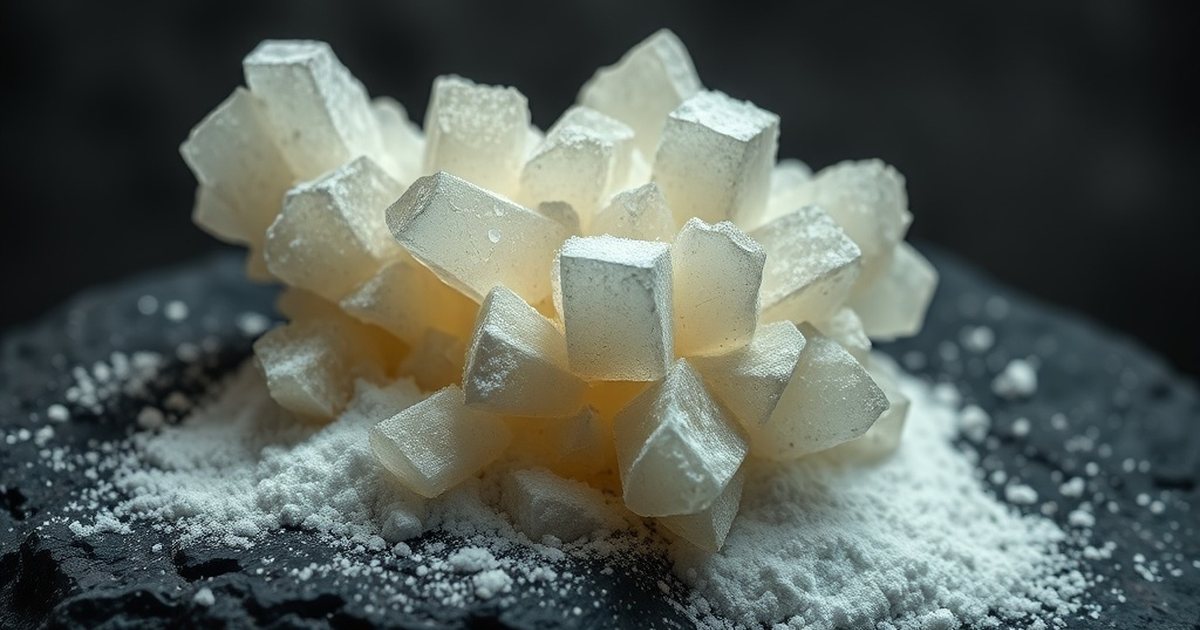
What Micronization and Mesoporous Structure Can Do
Separate from the liquid-vs-powder question, researchers have engineered zeolite’s porous structure for drug delivery purposes. One study used mesoporous clinoptilolite to enhance the dissolution of the anticancer drug letrozole, showing that the zeolite’s pore structure can be used to speed up how quickly an entrapped compound releases and dissolves [2]. Another used a zeolite-based system for controlled-release calcium delivery aimed at osteoporosis prevention, again exploiting the mineral’s porous architecture to modulate release rate over time [3].
These studies are instructive for a different reason: they show that zeolite’s pore structure is genuinely useful for controlling how fast something dissolves or releases, which is a real, well-documented property of the material. But both studies used clinoptilolite as a delivery vehicle for a specific active compound (a drug or calcium) in engineered formulations, not as a standalone liquid or powder supplement being compared to itself. Extrapolating this drug-delivery research to “our liquid zeolite dissolves faster in your gut and therefore works better” is not something these studies actually tested.

The Marketing Gap: What Liquid Zeolite Sellers Claim vs What's Been Tested
Liquid zeolite marketing often invokes terms like “nano-sized,” “activated,” or “hydrated” to suggest a proprietary process makes the product more bioavailable than powder. None of the evidence here tested a commercial liquid zeolite suspension against a commercial powder or capsule product for any human health outcome. The particle-size research that exists comes from an agricultural context [1], and the dissolution/delivery research comes from pharmaceutical engineering contexts [2][3], neither of which is a head-to-head test of finished consumer products.
That gap doesn’t mean liquid forms are useless or that all marketing claims are false, it means the specific comparative claim (“liquid absorbs better than powder”) hasn’t been directly tested in the way it’s advertised. Consumers are being asked to trust a chain of inference: smaller particles matter in some contexts, therefore a liquid product is smaller-particle, therefore it’s “better absorbed.” Each link in that chain has some scientific basis somewhere, but the final product claim is unverified.
Why Source and Contamination Matter More Than Form
Because clinoptilolite is a mined mineral, its purity depends heavily on the deposit it comes from and how it’s processed, not on whether it ends up as a powder or a liquid. Contamination with lead or other heavy metals is a documented concern with zeolite products generally, and this risk exists independent of the liquid-vs-powder question. A liquid product from a poorly sourced deposit is not safer than a powder from a well-tested one, and vice versa.
This is arguably the more important purchasing decision than form factor: does the seller provide a current, third-party certificate of analysis (COA) showing heavy metal testing for the specific batch you’re buying? The FDA has not evaluated zeolite for any health claim, so there’s no regulatory floor guaranteeing purity, which puts the burden on the brand’s own testing transparency.

Practical Takeaway on Choosing a Form
If particle size within a given form matters (and the agricultural research suggests it can [1]), the practical proxy for a consumer is looking for stated micron size or “micronized” processing on the label, rather than assuming liquid automatically means smaller particles. Some powders are milled to very fine particle sizes; some liquid suspensions may simply be coarse powder mixed with water or a carrier liquid with no special size reduction at all.
Cost, convenience, and taste tolerance are reasonable, honest reasons to prefer one form over another. Superior absorption or effectiveness is not, at this point, a claim the cited evidence can support for either form specifically.
🛒 Where to Buy Zeolite (Clinoptilolite)
- CleanseParasites Heavy Metal + Microplastics Binder Editor’s Pick
Contains zeolite alongside milk thistle, spirulina, and other binder herbs. - Touchstone Essentials Pure Body Extra Strength Zeolite
liquid, 1 tbsp (15 mL) — Best-known liquid nano-zeolite brand; MLM pricing but widely trusted in alt-health community - BodyBio Zeolite Powder
powder, 1/2 tsp — Practitioner-oriented brand, micronized clinoptilolite powder - Pure Zeolite Zeolite Powder (Ultimate Detox Clay)
powder, 1/4-1 tsp — Budget-friendly micronized powder - Zeo Health ZeoCharge
powder, 1/2 tsp — Long-standing niche zeolite brand, ultra-fine micronized clinoptilolite
As an Amazon Associate we earn from qualifying purchases. Quality varies widely — always choose a product with a published third-party test (COA) before buying.

A Note on the Evidence
The FDA has not evaluated zeolite for any health claim, and the human evidence here is limited to small, specific trials, none of which directly compare liquid and powder forms; anyone with kidney issues, on other medications, or considering zeolite for heavy-metal exposure should talk to a doctor first, and this article is informational, not medical advice.
Frequently Asked Questions
Is liquid zeolite actually absorbed better than powder?
There’s no direct human evidence comparing finished liquid and powder zeolite products for absorption or effectiveness. Zeolite’s known effects operate at the gut level via ion exchange, shown in a colitis model using a microparticulate preparation [4], rather than through the mineral itself crossing into the bloodstream, which complicates the whole premise of “better absorption.”
Does particle size matter for zeolite at all?
Yes, particle size affects clinoptilolite’s binding behavior, as shown in feedlot cattle studies comparing different particle sizes for nitrogen and ammonia binding [1]. This principle is real, but it hasn’t been tested specifically in liquid versus powder human supplements.
What does 'activated' or 'nano-sized' zeolite actually mean?
These are largely marketing terms without a standardized definition in the cited research. Legitimate particle-size reduction (micronization) is a real, studied variable [1], but there’s no evidence tying specific commercial terms like ‘activated’ to a tested outcome.

Can zeolite's structure be used to control how fast something releases in the body?
Yes, this is well documented for engineered pharmaceutical applications, mesoporous clinoptilolite has been used to speed drug dissolution [2] and to create a controlled-release calcium delivery system [3]. These are specialized drug-delivery formulations, not standalone supplement products.
What should I actually check before buying a zeolite product, liquid or powder?
Look for a current third-party certificate of analysis showing heavy metal testing (lead in particular), since contamination risk varies by mining source and isn’t determined by form. This matters more for safety than the liquid-vs-powder choice.
Has zeolite been proven to detoxify heavy metals from the whole body?
No. Human clinical evidence is limited to small trials on gut and immune markers [4], not whole-body heavy-metal detoxification. Whole-body detox claims outrun what’s actually been studied.
References
- Myers CA et al. Feeding or pen surface application of clinoptilolite with different particle sizes: impact on nitrogen utilization and manure ammonia emissions in feedlot cattle. Journal of animal science (2024). PMID 39126407
- Kukobat R et al. Enhanced dissolution of anticancer drug letrozole from mesoporous zeolite clinoptilolite. Journal of colloid and interface science (2024). PMID 37713915
- Fabiano A et al. A New Calcium Oral Controlled-Release System Based on Zeolite for Prevention of Osteoporosis. Nutrients (2019). PMID 31618877
- Nizet S et al. Clinoptilolite in Dextran Sulphate Sodium-Induced Murine Colitis: Efficacy and Safety of a Microparticulate Preparation. Inflammatory bowel diseases (2017). PMID 29272495
These statements have not been evaluated by the Food and Drug Administration. This information is not intended to diagnose, treat, cure, or prevent any disease. Content is for informational purposes only and is not medical advice; consult a qualified healthcare provider before starting any supplement. As an Amazon Associate we earn from qualifying purchases.