Zeolite supplements, usually labeled with the mineral name clinoptilolite, have become a fixture of the ‘gut health’ and ‘detox’ supplement aisle. The pitch is simple: a porous volcanic mineral that traps toxins and heavy metals as it passes through your digestive tract. The chemistry behind that pitch is real. Clinoptilolite genuinely does bind certain charged particles inside its cage-like structure. What’s less settled is how much of that lab-bench chemistry translates into a meaningful health benefit once the mineral is swallowed as a powder, liquid, or capsule.
This article explains what clinoptilolite actually is, the mechanism supplement companies point to, what it’s sold as, and where the evidence stops and the marketing starts. None of this is medical advice, and the FDA has not evaluated zeolite for any health claim.
Key Takeaways
- Clinoptilolite is a real, well-characterized mineral with genuine ion-exchange and adsorption properties, demonstrated mainly in industrial and lab settings.
- Human clinical evidence is limited to small trials on narrow gut/immune markers plus one placebo-controlled zeolite trial showing reduced absorption of co-ingested lead[1], not proof of whole-body heavy-metal detoxification.
- The FDA has not evaluated zeolite for any health claim; treat ‘detox’ and ‘immune support’ marketing claims as unproven until backed by cited trials.
- Because it’s a mined mineral, contamination risk (including lead) varies by source, making third-party COA testing more important here than for many supplements.
- This is informational content, not medical advice; talk to a doctor before use, especially with kidney disease or on other medications.
What clinoptilolite actually is
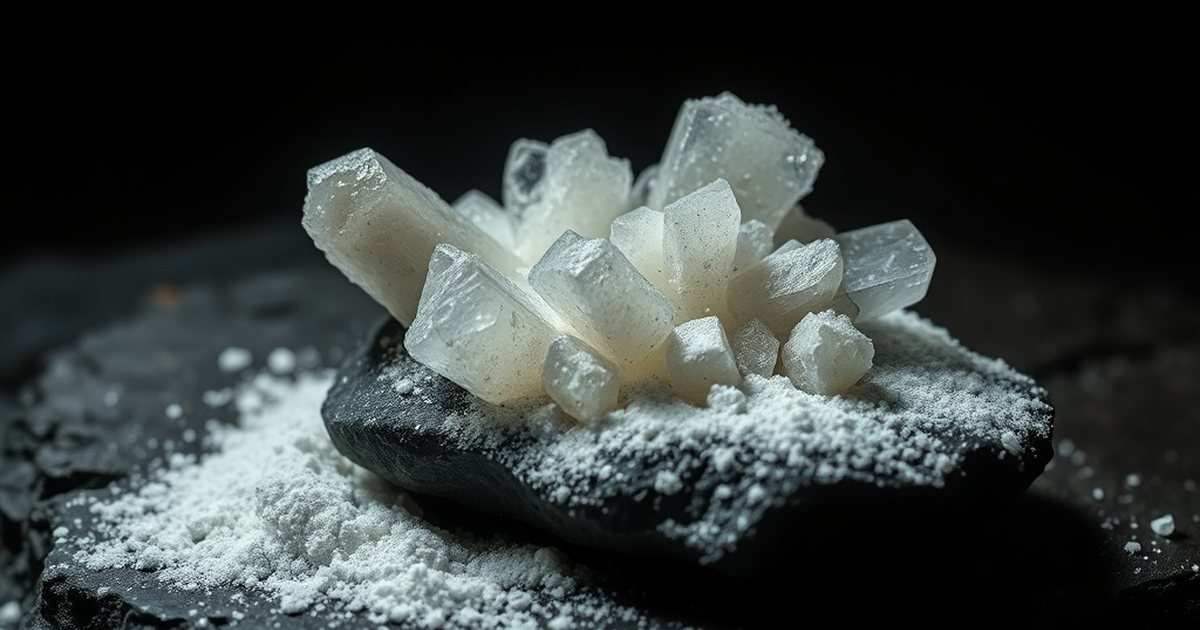
Zeolites are a family of naturally occurring aluminosilicate minerals that form when volcanic ash reacts with alkaline groundwater over long periods of time. Clinoptilolite is the specific zeolite species most commonly mined and sold as a dietary supplement. Structurally, it’s built from a repeating lattice of silicon, aluminum, and oxygen atoms that forms microscopic channels and cavities, like a rigid, mineral-based sponge at the molecular scale.
Those channels carry a slight negative charge, which is why clinoptilolite attracts and holds onto positively charged ions (cations), including ammonium, and to varying degrees certain metal cations. This is a well-documented property in materials science and is exactly why zeolites are used industrially in water filtration, agriculture, and animal feed, long before they showed up in supplement bottles.
The proposed mechanism: ion exchange and adsorption
Supplement marketing for zeolite centers on two related chemical processes. The first is ion exchange, where the mineral swaps a loosely held ion (typically sodium or calcium) sitting in its lattice for a different cation it encounters in the gut, such as ammonium. The second is adsorption, where molecules stick to the mineral’s large internal surface area rather than being chemically exchanged.

In a test tube, both processes are straightforward to demonstrate: clinoptilolite can pull ammonium and some metal ions out of a solution. The open question is what happens in a living digestive tract, where pH, competing minerals, food, and transit time all change the picture, and where the mineral is not sitting in a beaker but moving through several feet of gut alongside everything else you’ve eaten. Mechanism in a dish is not the same as effect in a body.
What it's actually sold as, and what people use it for
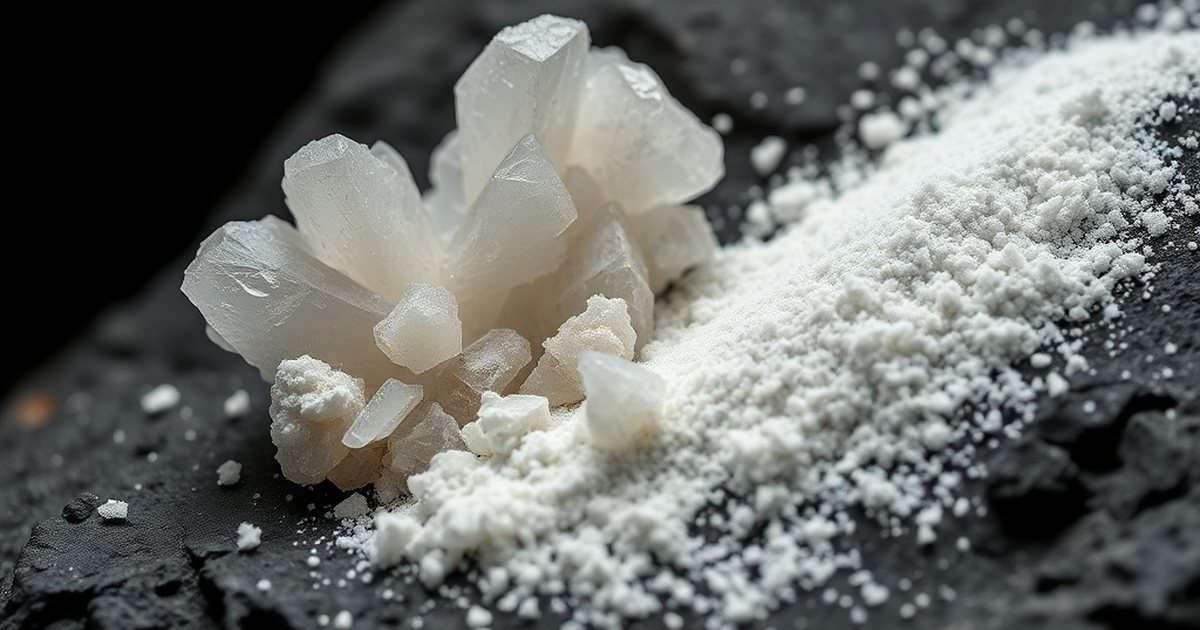
Clinoptilolite supplements come in three main forms: micronized powder (the mineral ground to a fine particle size, sometimes stirred into water), liquid suspensions (micronized particles pre-mixed in a liquid, often marketed as ‘activated’ or having a larger internal surface area), and capsules or tablets containing the powdered mineral.
Marketing claims cluster around a few themes: general ‘detoxification,’ heavy metal binding, gut and digestive support, and sometimes immune support. These are broad claims, and the strength of the underlying human evidence varies a lot depending on which specific claim is being made, which is the next section.
What human research actually shows, and where it stops
Clinical research on clinoptilolite in humans is limited in both volume and scope. The trials that exist are generally small, and they tend to look at narrow, measurable endpoints such as certain gut or immune-related markers, not whole-body heavy-metal detoxification or broad ‘toxin removal.’
That distinction matters. A supplement showing a signal on a specific lab marker in a small trial is a different, much narrower claim than ‘this detoxifies your body of heavy metals,’ which is the language often used in marketing. The strongest human result is narrow and specific: in a randomised, double-blind, placebo-controlled trial, 42 healthy adults swallowed a traceable lead isotope, and taking purified clinoptilolite-tuff at the same time reduced how much of that lead reached the bloodstream by roughly 90%[1]. Read precisely, that is a binder blocking absorption of a metal in the same swallow — not a supplement retrieving metal already stored in bone or organs, which no trial has shown. Where zeolite has been tested against a symptom rather than a tracer, the record is mixed: a randomised trial in 30 patients with diarrhoea-predominant IBS missed its primary endpoint, 21% reporting relief against 25% on placebo, though some secondary measures such as abdominal pain did move[2]. Readers should treat any zeolite product claiming proven whole-body detox in humans with real skepticism until it’s backed by a citable trial.

The contamination problem that's specific to zeolite
Because clinoptilolite is a mined mineral rather than a synthesized compound, its exact composition depends on the geology of the deposit it came from and how it was processed afterward. Zeolite-bearing rock can occur alongside trace heavy metals, including lead, and processing methods (grinding, washing, micronizing) affect what ends up in the final product.
This is a meaningfully bigger concern for zeolite than for most supplements, precisely because the product is marketed as a heavy-metal binder while itself being a mined mineral. A source with poor quality control could plausibly deliver some of the very contaminants it claims to remove. This is the single strongest practical reason to demand third-party Certificate of Analysis (COA) testing for heavy metals on any zeolite product before using it, not a generic supplement-safety platitude, but a source-specific risk for this category.
How to evaluate a zeolite product if you're considering one
Look for a current, batch-specific third-party COA that tests for lead, arsenic, cadmium, and mercury, not a generic ‘quality tested’ badge. Look at particle size claims (micronized, sub-micron) with some skepticism; a smaller particle size may increase surface area but doesn’t by itself prove clinical efficacy. Be wary of any product claiming it ‘detoxes heavy metals from your whole body,’ ‘reverses’ a health condition, or promises immune or gut effects without a cited human trial behind the specific claim.
As with any mineral supplement, people with kidney disease, anyone on medications with narrow interaction windows, and pregnant or breastfeeding people should talk to a doctor before use, since altered mineral or ion exchange in the gut is exactly the kind of effect that can interact with existing conditions or drugs.

🛒 Where to Buy Zeolite (Clinoptilolite)
- CleanseParasites Heavy Metal + Microplastics Binder Editor’s Pick
Contains zeolite alongside milk thistle, spirulina, and other binder herbs. - Touchstone Essentials Pure Body Extra Strength Zeolite
liquid, 1 tbsp (15 mL) — Best-known liquid nano-zeolite brand; MLM pricing but widely trusted in alt-health community - BodyBio Zeolite Powder
powder, 1/2 tsp — Practitioner-oriented brand, micronized clinoptilolite powder - Pure Zeolite Zeolite Powder (Ultimate Detox Clay)
powder, 1/4-1 tsp — Budget-friendly micronized powder - Zeo Health ZeoCharge
powder, 1/2 tsp — Long-standing niche zeolite brand, ultra-fine micronized clinoptilolite
As an Amazon Associate we earn from qualifying purchases. Quality varies widely — always choose a product with a published third-party test (COA) before buying.
A Note on the Evidence
The human trials cited here are small, and each tested one specific purified clinoptilolite material rather than retail supplements as a category. Blood-level monitoring across three supplementation trials also found copper reduced in osteoporosis patients and sodium and calcium below reference values, so the ion exchange that binds unwanted cations acts on wanted ones too[3]. This is informational content, not medical advice, and human clinical evidence for zeolite’s health claims remains limited; talk to a healthcare provider before using it, especially if you have kidney disease or take other medications.
Frequently Asked Questions
Is zeolite the same as clinoptilolite?
Zeolite is a broad mineral family; clinoptilolite is the specific zeolite species most commonly mined and sold as a supplement. When a product label says ‘zeolite,’ it almost always means clinoptilolite.
Does zeolite actually remove heavy metals from the body?
Clinoptilolite can bind certain cations, including some metal ions, in laboratory conditions through ion exchange and adsorption. Human clinical evidence for whole-body heavy-metal detoxification from oral supplementation is not established; the available human research is limited to small trials on other, narrower markers.

Is zeolite approved by the FDA for detox or health claims?
No. The FDA has not evaluated zeolite for any specific health claim, and it is sold as a dietary supplement, not a drug.
Can zeolite supplements be contaminated with heavy metals?
Yes, this is a real and source-specific concern. Because clinoptilolite is mined rock, its trace mineral content, including potential lead contamination, depends on the deposit and processing method, which is why third-party Certificate of Analysis testing matters more for this category than for many supplements.
What forms does zeolite come in?
Micronized powder, liquid suspensions, and capsules or tablets are the three common forms sold as supplements. Particle size and ‘activation’ claims vary by brand and are not standardized.
Who should avoid zeolite supplements or ask a doctor first?
Anyone with kidney disease, anyone taking medications that depend on stable mineral or electrolyte levels, and pregnant or breastfeeding people should consult a doctor before use, since the underlying ion-exchange mechanism can plausibly interact with existing conditions or drugs.
References
- Samekova K et al. Concomitant oral intake of purified clinoptilolite tuff (G-PUR) reduces enteral lead uptake in healthy humans. Scientific reports (2021). PMID 34285282
- Anderle K et al. Safety and efficacy of purified clinoptilolite-tuff treatment in patients with irritable bowel syndrome with diarrhea: Randomized controlled trial. World journal of gastroenterology (2022). PMID 36569277
- Kraljević Pavelić S et al. Clinical Evaluation of a Defined Zeolite-Clinoptilolite Supplementation Effect on the Selected Blood Parameters of Patients. Frontiers in medicine (2022). PMID 35712111
These statements have not been evaluated by the Food and Drug Administration. This information is not intended to diagnose, treat, cure, or prevent any disease. Content is for informational purposes only and is not medical advice; consult a qualified healthcare provider before starting any supplement. As an Amazon Associate we earn from qualifying purchases.