Zeolite, and specifically the mineral clinoptilolite, shows up often in supplement marketing tied to cancer prevention or “detox” support. The actual research picture is narrower and more technical than the marketing suggests: most of what exists comes from laboratory cell studies, animal models, and early-stage materials science, not human clinical trials.
This article walks through what has genuinely been studied, using only the cited evidence, so you can understand the difference between a lab finding and a health claim. None of this is medical advice, and no claim here should be read as evidence that zeolite treats, cures, or prevents cancer in people.
Key Takeaways
- Most zeolite-cancer research is laboratory (in vitro) or animal-model work, not human clinical trials [1][2][3].
- Some of the most promising-sounding research uses zeolite as an engineered drug-delivery material paired with actual chemotherapy agents, not as a standalone treatment [4][5].
- Older “adjuvant therapy” research framed zeolite as a possible support alongside standard treatment, never a replacement for it [6].
- The FDA has not evaluated zeolite for any health claim, and no cited study shows it treats or cures human cancer.
- Because zeolite is a mined mineral, contamination with lead or other heavy metals can vary by source, so third-party testing matters if you’re considering a product for any reason.
How Clinoptilolite Is Thought to Interact With Cells
Clinoptilolite has a porous, cage-like crystal structure that allows it to exchange cations and adsorb certain molecules and ions. Some of the earliest laboratory work looked at whether this property could alter the environment tumor cells grow in, rather than acting on the cells directly. One in vitro study examined how clinoptilolite affected cell culture media and how those changes in turn affected tumor cell behavior in the dish [1].
This is a mechanistic, cell-culture-level observation, not evidence of a whole-body anticancer effect. It tells researchers something about how the mineral behaves chemically in a controlled system, which is a starting point for further research, not a conclusion about treating disease in a living organism.

Animal Model Research: Asbestos-Related Mesothelioma
One of the more substantive studies behind this page used a transgenic animal model of malignant mesothelioma, a cancer strongly linked to asbestos exposure, to test whether zeolites could reduce asbestos-related toxicity [2]. Zeolites and asbestos are both mineral fibers, and part of the research interest is whether certain zeolite formulations can interfere with the toxic mechanisms asbestos fibers trigger in lung and pleural tissue.
This is an animal study, and its findings on toxicity amelioration in a specific transgenic model do not automatically generalize to humans, to other cancer types, or to oral supplementation with commercial zeolite products. The study also underscores an important point: not all mineral fibers behave the same way, and zeolite research in this context is about a very specific exposure pathway, not general cancer prevention.
Zeolite as a Drug Delivery Material, Not a Standalone Treatment
A distinct and increasingly active line of research treats zeolite not as a therapeutic agent itself, but as an engineering material, a scaffold or carrier for delivering actual chemotherapy drugs more precisely. One 2024 study described a chitosan-magnetite-zeolite capsule system designed to deliver gemcitabine, a chemotherapy drug, in a targeted way, while also testing antibacterial properties of the complex [4].
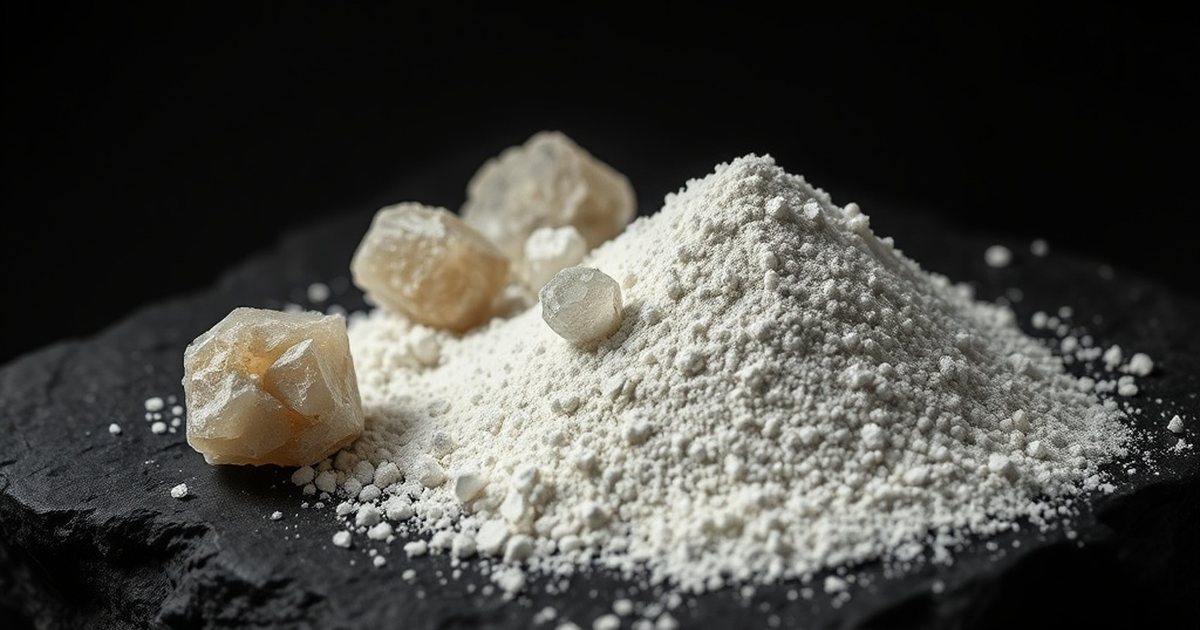
A related 2025 paper investigated a novel organomineral complex designed for prolonged antitumor action, again exploring engineered material properties rather than raw mineral supplementation [5].

It’s important to be precise about what this kind of research means: the anticancer activity in these studies comes from the chemotherapy drug (gemcitabine) or the engineered complex as a whole. The zeolite component’s role is structural and delivery-related. This is fundamentally different from taking a zeolite powder or liquid supplement, which contains no chemotherapy payload and is not engineered as a targeted delivery vehicle.
Cell-Line Studies: Cytotoxicity in Specific Cancer Types
Laboratory studies have tested nanoscale clinoptilolite directly against isolated cancer cell lines to see whether it has cytotoxic (cell-killing) or apoptotic (programmed cell death-inducing) effects. One such study looked at nanoclinoptilolite’s effect on canine osteosarcoma (bone cancer) cell lines and reported cytotoxic and apoptotic activity [3].
Cell-line studies like this are useful for generating hypotheses and understanding potential mechanisms, but a substance killing cancer cells in a petri dish is a long way from showing it does the same thing safely and effectively inside a living body, human or animal, especially when taken orally as a supplement. Cell culture conditions don’t replicate digestion, absorption, immune response, or dosing in a whole organism.
Adjuvant Therapy Research: The Oldest and Most-Cited Study
One of the earliest and most frequently referenced papers in this space, published in 2001, examined natural zeolite clinoptilolite as a potential adjuvant, meaning a supportive addition alongside standard anticancer therapy, rather than a replacement for it [6].

Even in this older literature, the framing was adjuvant and exploratory, not curative. “Adjuvant” research asks whether a substance might support or enhance existing treatment, not whether it can substitute for chemotherapy, radiation, surgery, or other standard-of-care oncology treatment. More than two decades later, this line of inquiry has not translated into established clinical use.
What's Missing: Human Clinical Trials
There are no human clinical trials demonstrating that zeolite or clinoptilolite treats, shrinks, prevents, or cures cancer. The studies cited here span in vitro cell culture, cell-line cytotoxicity testing, animal models and materials-science drug-delivery engineering, plus one randomized controlled trial in cancer patients that tested zeolite against chemotherapy side effects rather than against the cancer itself [7]. None of that measures whether zeolite changes cancer outcomes.
The FDA has not evaluated zeolite for any health claim, and it is not approved as a cancer treatment or adjuvant therapy in humans. Human trials of zeolite do exist, on gut and immune markers and on chemotherapy side effects, but none of them constitutes human cancer-outcome data. Anyone encountering marketing claims that zeolite “detoxifies” the body of cancer-causing agents or treats cancer directly should treat those claims as unsupported by the current evidence.
🛒 Where to Buy Zeolite (Clinoptilolite)
- CleanseParasites Heavy Metal + Microplastics Binder Editor’s Pick
Contains zeolite alongside milk thistle, spirulina, and other binder herbs. - Touchstone Essentials Pure Body Extra Strength Zeolite
liquid, 1 tbsp (15 mL) — Best-known liquid nano-zeolite brand; MLM pricing but widely trusted in alt-health community - BodyBio Zeolite Powder
powder, 1/2 tsp — Practitioner-oriented brand, micronized clinoptilolite powder - Pure Zeolite Zeolite Powder (Ultimate Detox Clay)
powder, 1/4-1 tsp — Budget-friendly micronized powder - Zeo Health ZeoCharge
powder, 1/2 tsp — Long-standing niche zeolite brand, ultra-fine micronized clinoptilolite
As an Amazon Associate we earn from qualifying purchases. Quality varies widely — always choose a product with a published third-party test (COA) before buying.

A Note on the Evidence
The research here is mostly lab, cell-line and animal work, plus materials-science drug-delivery studies and one randomized trial in chemotherapy patients; none of it establishes that zeolite treats or prevents cancer in humans. Anyone with a cancer diagnosis should rely on evidence-based oncology care and talk to their treatment team before adding any supplement, since it’s not medical advice.
Frequently Asked Questions
Does zeolite cure cancer?
No. None of the available research, including in vitro, animal, and cell-line studies, shows that zeolite cures cancer in humans [1][3]. Claims to that effect go well beyond what has been studied.
What is the difference between zeolite as a cancer treatment and zeolite as a drug delivery material?
In drug-delivery research, zeolite acts as a structural carrier that helps transport an actual chemotherapy drug like gemcitabine to a target site [4]. The anticancer effect in that research comes from the drug, not the zeolite itself, which is a very different claim than zeolite being anticancer on its own.
Has zeolite been tested in human cancer patients?
Yes, but not as a cancer treatment. A randomized, double-blind, placebo-controlled trial gave oral PMA-zeolite or placebo to 120 patients receiving oxaliplatin-based chemotherapy and tracked side effects, including nerve conduction, blood counts and liver toxicity [7]. No trial has tested whether zeolite changes cancer outcomes. The 2001 adjuvant therapy paper is one of the more clinically-oriented references, but it is framed as exploratory adjuvant research, not a completed human efficacy trial [6].

Why do some zeolite studies involve asbestos and mesothelioma?
Because zeolites and asbestos are both mineral fibers, researchers have studied whether certain zeolite formulations can reduce toxicity from asbestos exposure in an animal model of mesothelioma [2]. This is a specific toxicology question, not general evidence that zeolite prevents or treats cancer broadly.
Is nanoclinoptilolite the same as the zeolite powder sold as a supplement?
Not necessarily. The osteosarcoma cell-line study used nanoscale clinoptilolite prepared under laboratory conditions [3], which may differ meaningfully in particle size, purity, and preparation from commercial micronized powders or liquid suspensions sold as supplements.
Is zeolite safe to take as a supplement?
The most direct safety evidence in cancer patients comes from a randomized, double-blind, placebo-controlled trial of 120 people receiving oxaliplatin-based chemotherapy, which tracked haematological and liver toxicity alongside nerve conduction over six months [7]. That covers a commercial zeolite product taken during chemotherapy rather than years of self-directed supplementation, and no trial has followed cancer patients that long. Because zeolite is a mined mineral, contamination varies by source and processing, so anyone considering it should look for third-party contaminant testing and speak with a doctor, especially if undergoing cancer treatment.
References
- Katic M et al. A clinoptilolite effect on cell media and the consequent effects on tumor cells in vitro. Frontiers in bioscience : a journal and virtual library (2006). PMID 16368551
- Fan X et al. Zeolites ameliorate asbestos toxicity in a transgenic model of malignant mesothelioma. FASEB bioAdvances (2019). PMID 32123850
- Ulutaş PA et al. Cytotoxic and Apoptotic Effect of Nanoclinoptilolite on Canine Osteosarcoma Cell Lines. Journal of veterinary research (2020). PMID 33367149
- Guarín-González YA et al. Dual-Action Gemcitabine Delivery: Chitosan-Magnetite-Zeolite Capsules for Targeted Cancer Therapy and Antibacterial Defense. Gels (Basel, Switzerland) (2024). PMID 39451325
- Ilinskaya O et al. Novel Organomineral Complex with Prolonged Antitumor Action. International journal of molecular sciences (2025). PMID 41009766
- Pavelić K et al. Natural zeolite clinoptilolite: new adjuvant in anticancer therapy. Journal of molecular medicine (Berlin, Germany) (2001). PMID 11434724
- Vitale MG et al. ZeOxaNMulti Trial: A Randomized, Double-Blinded, Placebo-Controlled Trial of Oral PMA-zeolite to prevent Chemotherapy-Induced Side Effects, in particular, Peripheral Neuropathy. Molecules (2020). PMID 32414185
These statements have not been evaluated by the Food and Drug Administration. This information is not intended to diagnose, treat, cure, or prevent any disease. Content is for informational purposes only and is not medical advice; consult a qualified healthcare provider before starting any supplement. As an Amazon Associate we earn from qualifying purchases.