Zeolite supplements, usually clinoptilolite, are marketed heavily around the idea of ‘detoxing’ heavy metals, and search results are full of ranked lists claiming to identify the ‘best’ one. The honest starting point is what the human trial record does and does not show. It does show one thing: in a randomised, placebo-controlled, double-blind trial in 42 healthy adults, purified clinoptilolite tuff taken alongside a stable lead isotope tracer cut absorption of that lead by about 90%[1]. It does not show that any zeolite product lowers the metal already stored in a person’s body, and where zeolite has been tested against symptoms it has underperformed its own hype; a randomised trial in diarrhoea-predominant irritable bowel syndrome missed its primary endpoint, 21% responders against 25% on placebo[2]. That is why what follows is a framework for evaluating quality and purity claims rather than a ranking by detox outcomes: no product on the market has outcome data to be ranked by.
Clinoptilolite is a real, naturally occurring mineral with a well-documented cage-like crystal structure that binds certain cations through ion exchange. That physical chemistry is not in dispute. What’s unresolved is whether swallowing it does anything meaningful once it’s in a human gut, and whether any given product on the market is even a clean, uncontaminated version of the mineral. This piece focuses on how to assess a zeolite product’s purity and value rationally, without pretending the underlying health claims are more settled than they are.
Key Takeaways
- Zeolite (clinoptilolite) is a real mineral with genuine ion-exchange chemistry, but the FDA has not evaluated it for any health claim.
- Because it’s mined, contamination risk (lead, arsenic, cadmium, mercury) varies by source and batch, making third-party COAs essential, not optional.
- Demand a current, batch-specific COA from an independent lab showing quantitative heavy-metal results and confirming actual clinoptilolite content.
- Particle size, micronization claims, and liquid vs. capsule form are manufacturing details, not proven efficacy differentiators.
- No clinical evidence supports whole-body heavy-metal detox claims for oral zeolite; existing human research, where available, is small and narrowly focused on gut or immune markers.
What Zeolite Actually Is, and What It Is Not
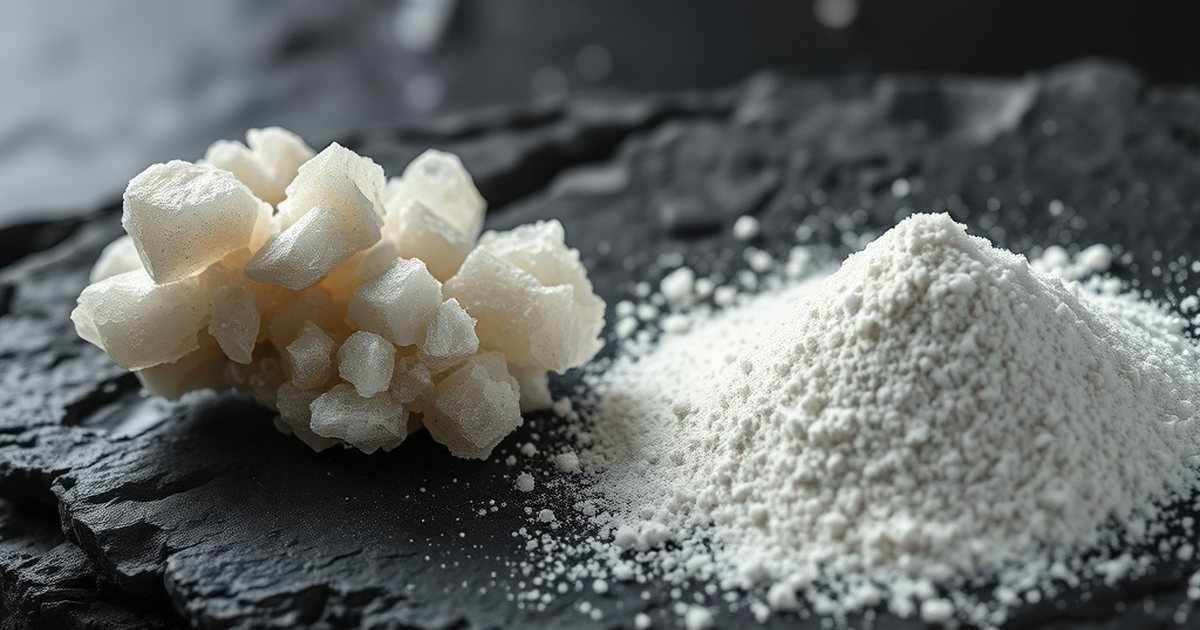
Clinoptilolite is an aluminosilicate mineral formed naturally from volcanic ash, mined from deposits around the world. Its lattice structure contains microscopic cages and channels that can trap or exchange certain positively charged ions, including some heavy metal cations and ammonium, when the mineral is in contact with fluid. This is a property of the raw mineral, not a manufactured pharmaceutical action.
It is sold as micronized powder, liquid suspension, and capsules, marketed for gut support, general detox, and immune support. None of these uses have been evaluated by the FDA for safety or effectiveness, and zeolite supplements are regulated as dietary supplements, not drugs. That means the manufacturer, not a regulator, is responsible for backing up any claim on the label.
Why Purity Matters More for Zeolite Than for Most Supplements
Because clinoptilolite is a mined mineral rather than something synthesized or extracted from a plant under controlled conditions, contamination is a real and variable risk. Volcanic deposits can contain trace heavy metals, including lead, arsenic, or other elements, depending on geological source and how the material was processed and milled. A supplement whose entire premise is binding heavy metals is undermined if it introduces heavy metals of its own.

This is the single most important reason to treat ‘best zeolite supplement’ rankings skeptically unless they are grounded in actual third-party lab data. A product’s purity cannot be assessed from marketing copy, ingredient panel claims like ‘pharmaceutical grade,’ or price point alone.
What a Real Certificate of Analysis Should Show
A meaningful Certificate of Analysis (COA) for a zeolite product should be issued by an independent, accredited third-party lab, not an in-house lab controlled by the manufacturer, and should be dated to the specific batch or lot you are purchasing, not a generic one posted years ago. It should report quantitative heavy metal testing, specifically lead, arsenic, cadmium, and mercury, with actual parts-per-million or parts-per-billion values, not a pass/fail checkbox.
Beyond heavy metals, a rigorous COA also verifies the clinoptilolite content itself, since some products are diluted with other cheaper aluminosilicate minerals or fillers that are not clinoptilolite at all. If a company cannot produce a current, batch-specific, third-party COA on request, that is a disqualifying gap regardless of how the product is marketed.
Particle Size and Form: Micronized Powder vs. Liquid vs. Capsule
Manufacturers frequently advertise ‘micronized’ or ‘activated’ zeolite, implying the particle size has been reduced to increase surface area and ion-exchange capacity. Smaller particle size is a legitimate physical variable that can affect how the mineral behaves in suspension, but there is no clinical evidence establishing an optimal particle size for any claimed human health outcome, so treat specific micron numbers as manufacturing detail rather than a proven efficacy marker.
Liquid zeolite suspensions are often marketed as more ‘bioavailable,’ but zeolite is an insoluble mineral, and the concept of systemic bioavailability that applies to a drug or a vitamin doesn’t map cleanly onto a mineral cage structure that isn’t absorbed intact into the bloodstream. Capsule and raw powder forms simply differ in convenience and dosing precision, not in some proven superior mechanism.

Evaluating Value: Cost Per Gram Is Not the Whole Story
Once purity is confirmed through an actual COA, cost-per-gram comparisons become a reasonable secondary filter, since clinoptilolite itself is a relatively cheap, abundant mineral and large price premiums are usually paying for marketing, encapsulation, or a liquid-suspension delivery format rather than a fundamentally different or better-performing mineral.
A product’s total value should be judged on three things in this order: verified purity and low contamination risk, transparency about sourcing and testing, and only then price. A cheap product with no COA is not good value regardless of its price, and an expensive product with vague sourcing claims is not automatically safer.
What the Evidence Does and Doesn't Support
One more finding belongs in a buyer’s guide, because it changes what “best” even means. A monitoring programme tracked blood minerals and metals by ICP-MS across three clinical trials of a certified clinoptilolite, running 28 days, 12 weeks and four years. The reassuring half: aluminium or lead leaking out of the material into the bloodstream was not detected an hour after a dose, and after four years of continuous use aluminium and nickel were significantly lower, not higher. The half that matters when choosing a product to take daily: copper fell in supplemented osteoporosis patients, and sodium and calcium dropped below reference values[3]. A binder that is good at holding cations does not check which cation it is holding. So the practical question for long-term use is not which brand ranks highest, it is whether anyone is watching your mineral panel, and whole-body heavy-metal detoxification remains unproven either way.
Anyone choosing a zeolite supplement should separate two different questions: is this a clean, well-tested mineral product, and does taking it do what the marketing claims. This article can help with the first question. It cannot responsibly answer yes to the second.

🛒 Where to Buy Zeolite (Clinoptilolite)
- CleanseParasites Heavy Metal + Microplastics Binder Editor’s Pick
Contains zeolite alongside milk thistle, spirulina, and other binder herbs. - Touchstone Essentials Pure Body Extra Strength Zeolite
liquid, 1 tbsp (15 mL) — Best-known liquid nano-zeolite brand; MLM pricing but widely trusted in alt-health community - BodyBio Zeolite Powder
powder, 1/2 tsp — Practitioner-oriented brand, micronized clinoptilolite powder - Pure Zeolite Zeolite Powder (Ultimate Detox Clay)
powder, 1/4-1 tsp — Budget-friendly micronized powder - Zeo Health ZeoCharge
powder, 1/2 tsp — Long-standing niche zeolite brand, ultra-fine micronized clinoptilolite
As an Amazon Associate we earn from qualifying purchases. Quality varies widely — always choose a product with a published third-party test (COA) before buying.
A Note on the Evidence
This article is informational, not medical advice, and no clinical evidence was available to support detoxification claims for oral zeolite; anyone with kidney disease, on other medications, or considering this supplement for a medical condition should consult a physician first.
Frequently Asked Questions
Is zeolite FDA approved for detox?
No. The FDA has not evaluated clinoptilolite zeolite for detoxification or any other health claim, and it is sold as an unregulated dietary supplement. Any label suggesting FDA approval or clearance for a health outcome should be treated as a red flag.
How do I know if a zeolite supplement is contaminated?
The only reliable way is a current, batch-specific Certificate of Analysis from an independent third-party lab showing quantitative results for lead, arsenic, cadmium, and mercury. Marketing language like ‘pharmaceutical grade’ or ‘pure’ is not a substitute for actual lab data.

Does a smaller particle size make zeolite work better?
Micronization changes the mineral’s surface area and physical behavior in suspension, but no clinical evidence in the material provided here establishes that a specific particle size produces a better human health outcome. Treat particle-size marketing as a manufacturing detail, not proof of efficacy.
Is liquid zeolite more effective than powder or capsules?
There’s no evidence basis to claim liquid suspensions are more effective; zeolite is an insoluble mineral, and the usual ‘bioavailability’ argument used for vitamins doesn’t map directly onto how this mineral behaves in the gut. Form should mostly be chosen for convenience and accurate dosing.
Can zeolite actually remove heavy metals from my body?
This is the central unproven claim in zeolite marketing. Human clinical evidence available for this analysis is limited to small trials on gut or immune markers plus one placebo-controlled zeolite trial showing reduced absorption of co-ingested lead[1], not systemic or whole-body heavy-metal removal, so no confident answer can be given either way.
What's the biggest red flag when shopping for zeolite?
A company that cannot or will not provide a current, independent, batch-specific COA. Since zeolite is a mined mineral with genuine contamination variability, that single document matters more than price, branding, or particle-size claims.
References
- Samekova et al. Concomitant oral intake of purified clinoptilolite tuff (G-PUR) reduces enteral lead uptake in healthy humans. Sci Rep (2021). PMID 34285282
- Anderle et al. Safety and efficacy of purified clinoptilolite-tuff treatment in patients with irritable bowel syndrome with diarrhea: Randomized controlled trial. World J Gastroenterol (2022). PMID 36569277
- Kraljević Pavelić et al. Clinical Evaluation of a Defined Zeolite-Clinoptilolite Supplementation Effect on the Selected Blood Parameters of Patients. Front Med (Lausanne) (2022). PMID 35712111
These statements have not been evaluated by the Food and Drug Administration. This information is not intended to diagnose, treat, cure, or prevent any disease. Content is for informational purposes only and is not medical advice; consult a qualified healthcare provider before starting any supplement. As an Amazon Associate we earn from qualifying purchases.