Zeolite is not a single substance but a family of related minerals, and the kind used in supplements, clinoptilolite, has a specific geologic origin story. It starts with a volcanic eruption, not a factory or a lab, which is part of why zeolite marketing leans so heavily on words like ‘natural’ and ‘ancient.’
Understanding how zeolite actually forms helps explain both its useful properties (a porous, cage-like structure that can bind certain ions) and its practical concerns (it is a mined rock, so its purity depends entirely on where and how it was formed and processed). This article walks through that formation process honestly, without overstating what it means for health.
Key Takeaways
- Zeolite forms when volcanic ash reacts with alkaline water over thousands to millions of years, not through any manufacturing process.
- The resulting crystal lattice is porous and cage-like, which is the structural basis for its ion-binding properties.
- Deposits are geographically limited to specific volcanic and alkaline-basin regions, and purity varies by deposit.
- Because zeolite is a mined mineral, contamination risk (including heavy metals) depends on the source deposit, not the brand name.[1]
- Micronization for supplement use increases exposed surface area but does not change or purify the mineral’s underlying composition.
It Starts With Volcanic Ash, Not Lava
Zeolites are aluminosilicate minerals, meaning their crystal structure is built from aluminum, silicon, and oxygen atoms. The raw material for most natural zeolite deposits is volcanic ash and glass, fine, glassy fragments ejected during explosive eruptions, rather than the slow-cooling lava that forms basalt or granite.
Volcanic glass is chemically unstable compared to fully crystallized rock. When that ash settles, whether on land or in shallow seas and lakes, it becomes vulnerable to chemical weathering in a way that solid lava is not. This instability is actually the key ingredient: it is what allows the ash to later reorganize into a completely different mineral structure.

Alkaline Water Does the Real Transformation
Volcanic ash does not turn into zeolite on its own. It needs to sit in contact with water for a long time, and the chemistry of that water matters enormously. Zeolite deposits typically form where volcanic ash accumulated in alkaline (high-pH), saline environments, closed desert lake basins, ancient sea beds, or groundwater percolating through ash layers.
In that alkaline water, the glassy ash slowly dissolves and its silicon and aluminum atoms rearrange into new, more stable crystal lattices. This process, called diagenesis, is essentially the ash reprecipitating into a different mineral. It is not a chemical reaction that happens in days or years; it is a slow replacement process measured in thousands to millions of years.
Why the Result Is a Porous, Cage-Like Structure
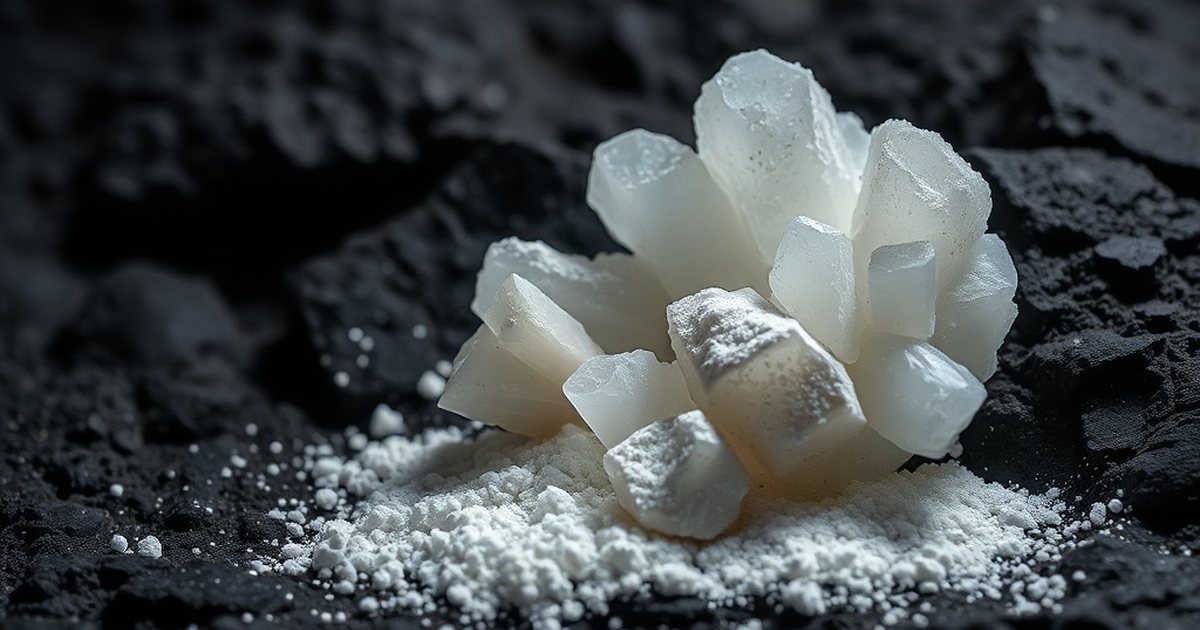
The specific way aluminum and silicon atoms link up during this transformation produces a crystal lattice full of interconnected channels and cavities, essentially a microscopic honeycomb. This is the defining feature of all zeolites, not just clinoptilolite, and it is why the mineral family is named from Greek roots meaning ‘boiling stone’ (early mineralogists noticed zeolites releasing trapped water vapor when heated).[2]
That cage structure is also what gives zeolite its practical relevance for gut and detox products: the channels carry a slight negative charge, which allows loosely bound positive ions (cations), including sodium, calcium, and in some cases certain heavy metal or ammonium ions, to be exchanged or adsorbed within the lattice. This is a structural property of the mineral, and it is distinct from claims about what that property does inside a living human body, which have much thinner evidence behind them.
Where Natural Clinoptilolite Deposits Actually Form
Because this process depends on a specific combination of volcanic ash source material, alkaline water chemistry, and geologic time, workable zeolite deposits are concentrated in particular regions rather than being evenly distributed worldwide. Known deposits include parts of the western United States, China, Turkey, Bulgaria, Slovakia, and New Zealand, areas with a history of both volcanic activity and the right sedimentary basin conditions.

Not all volcanic ash beds become zeolite-rich, and not all zeolite deposits are pure or food/supplement grade. Deposits vary in mineral purity, in which trace elements got incorporated during formation, and in the presence of other minerals mixed in during the same geologic period. This variability is exactly why a mined mineral used in a supplement needs source-specific verification rather than a blanket assumption that ‘it’s natural, so it’s clean.’
From Rock Deposit to Supplement Powder
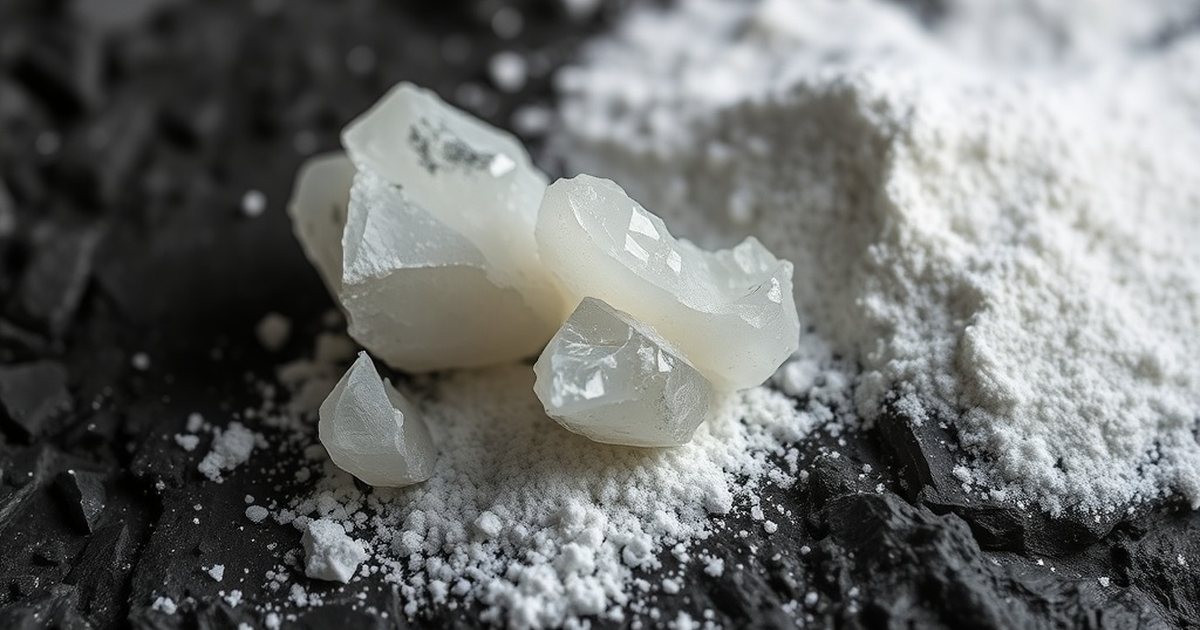
Once a deposit is identified and mined, the zeolite rock is crushed and, for supplement use, typically micronized, ground down to a very fine particle size so more of the internal surface area and channel structure is exposed and accessible. This is sold as loose powder, mixed into liquid suspensions, or encapsulated.
Because the mineral itself formed from volcanic ash and groundwater over geologic time, its final composition, including any heavy metal content such as lead, is fixed by that original geochemistry and by whatever the deposit was in contact with underground. Processing can filter or select cleaner material, but it cannot remove contamination that is structurally bound into the crystal lattice itself. That is the practical reason third-party certificate of analysis (COA) testing matters more for zeolite than for many other supplement categories.
🛒 Where to Buy Zeolite (Clinoptilolite)

- CleanseParasites Heavy Metal + Microplastics Binder Editor’s Pick
Contains zeolite alongside milk thistle, spirulina, and other binder herbs. - Touchstone Essentials Pure Body Extra Strength Zeolite
liquid, 1 tbsp (15 mL) — Best-known liquid nano-zeolite brand; MLM pricing but widely trusted in alt-health community - BodyBio Zeolite Powder
powder, 1/2 tsp — Practitioner-oriented brand, micronized clinoptilolite powder - Pure Zeolite Zeolite Powder (Ultimate Detox Clay)
powder, 1/4-1 tsp — Budget-friendly micronized powder - Zeo Health ZeoCharge
powder, 1/2 tsp — Long-standing niche zeolite brand, ultra-fine micronized clinoptilolite
As an Amazon Associate we earn from qualifying purchases. Quality varies widely — always choose a product with a published third-party test (COA) before buying.
A Note on the Evidence
This article describes the geology of zeolite formation and is informational only, not medical advice. The FDA has not evaluated zeolite for any health claim, human clinical evidence is limited to small trials on gut/immune markers rather than whole-body detoxification, and because zeolite is a mined mineral, anyone considering it should look for third-party contaminant testing and consult a doctor before use.
Frequently Asked Questions
Is zeolite man-made or natural?
The zeolite used in supplements, clinoptilolite, is a naturally occurring mineral formed from volcanic ash and alkaline water. Synthetic zeolites also exist and are used industrially, but they are chemically manufactured rather than mined.
How long does it take for zeolite to form in nature?
Formation is a slow diagenetic process, the reorganization of volcanic ash into a new crystal structure typically takes thousands to millions of years under the right water chemistry conditions.
Why does zeolite come from volcanic areas specifically?
Volcanic ash and glass are chemically unstable compared to solid lava rock, which makes them reactive enough to transform into new mineral structures when exposed to alkaline water over long periods.

Does where zeolite is mined matter for supplement safety?
Yes. Deposit location and geochemistry determine trace mineral and contaminant content, including possible heavy metals like lead, so third-party COA testing of the specific source is important rather than assuming all zeolite is equally clean.
What does the porous structure of zeolite actually do?
The cage-like lattice created during formation carries channels with a slight negative charge that can bind or exchange certain positive ions, this is a physical/chemical property of the mineral, distinct from unproven claims about whole-body detoxification in humans.
Is all zeolite the same once it's mined?
No. Even within the same broader mineral family, deposits differ in purity, particle structure, and trace element content depending on the specific volcanic ash source and the water conditions during formation.
References
- Critical Review on Zeolite Clinoptilolite Safety and Medical Applications in vivo. Frontiers in Pharmacology (2018). PMID 30538633
- Zeolite Clinoptilolite: Therapeutic Virtues of an Ancient Mineral. Molecules (2019). PMID 30999685
These statements have not been evaluated by the Food and Drug Administration. This information is not intended to diagnose, treat, cure, or prevent any disease. Content is for informational purposes only and is not medical advice; consult a qualified healthcare provider before starting any supplement. As an Amazon Associate we earn from qualifying purchases.