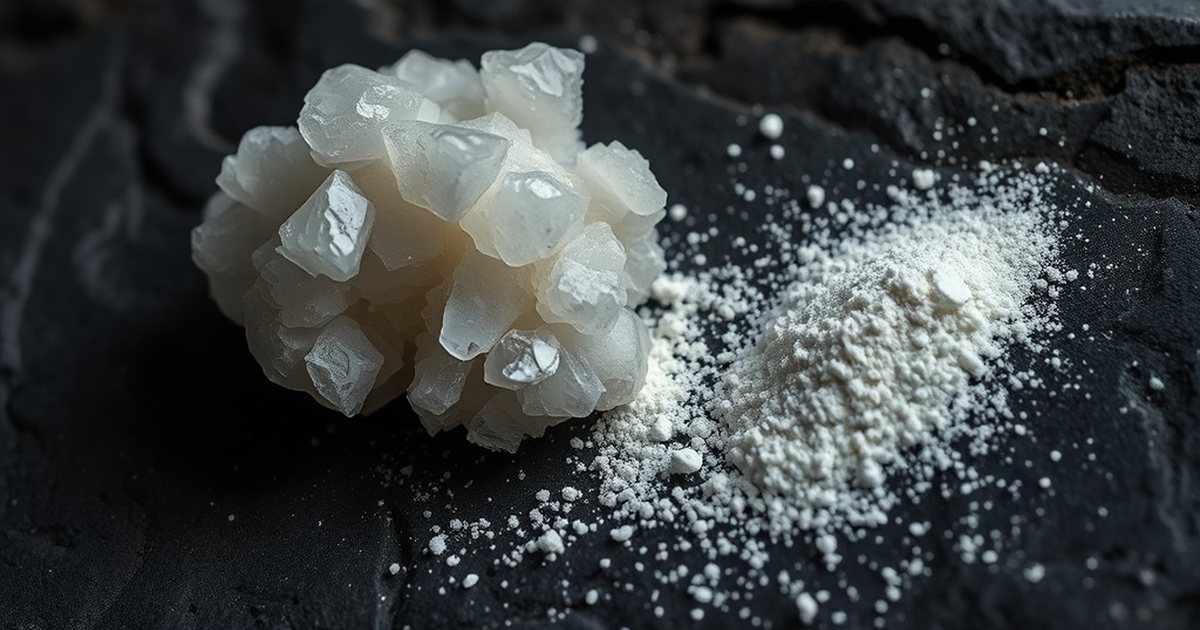
Clinoptilolite, the zeolite mineral most commonly sold as a gut or ‘detox’ supplement, works through ion exchange and physical adsorption in its honeycomb-like crystal lattice. Because it binds cations and other molecules as it passes through the gut, a reasonable question is whether it also binds medications, either reducing how much drug gets absorbed or changing how it behaves in the digestive tract.
The honest answer is that dedicated human research on zeolite-drug interactions is essentially absent. What exists is a small set of studies on zeolite’s general binding behavior, mostly in non-pharmaceutical contexts (alcohol, soil lead, poultry feed), from which only cautious, mechanism-based inferences can be drawn. This article lays out what is and isn’t known, and where caution is warranted.
Key Takeaways
- No published human trial has tested zeolite’s effect on any specific medication’s absorption or blood levels.
- The one human clinoptilolite study measured its effect on alcohol absorption, not drugs, but demonstrates the gut-binding mechanism is real in people [1]
- Zeolite’s ion-exchange and adsorption properties are broad-spectrum, not selective, which is why timing separation from medications is a reasonable precaution even without direct trial data
- Narrow-therapeutic-index medications (thyroid hormone, anticoagulants, anticonvulsants) warrant a conversation with a prescriber or pharmacist before combining with zeolite
- Because zeolite is a mined mineral, third-party COA verification for heavy metals matters as much as the interaction question itself
How Zeolite's Binding Mechanism Could Affect Drugs
Clinoptilolite’s cage-like aluminosilicate structure gives it a negatively charged internal surface that attracts and holds positively charged ions (cations) through exchange with its own loosely held sodium, potassium, and calcium ions. It also has adsorptive surface properties that can trap other molecules non-selectively as material moves through the gut lumen.
This is the same general property that lets it bind ammonium in the gut and, in animal feed studies, altered mineral handling in laying hens over time [2]. A physically similar mechanism was also shown to affect uptake of lead by tomato plants grown in contaminated soil, where added zeolite changed how much lead (and other nutrients) the plant took up from the surrounding medium [3]. Neither study involved oral medications in humans, but they demonstrate that zeolite’s binding is not selective for a single target molecule, it can shift the availability of multiple charged species at once.
The pharmacologically relevant question, whether zeolite meaningfully reduces absorption of orally dosed drugs in the human gut, has not been directly tested in the cited evidence or, to our knowledge, in any published human trial.

What the Human Evidence Actually Covers
The only human clinoptilolite study in the cited evidence looked at ethanol, not medication. In a pilot trial, clinoptilolite was given to healthy volunteers to assess whether it could reduce blood alcohol levels after drinking, with effects examined by gender [1]. This tells us zeolite can interact with at least one small, water-soluble molecule in the human gut under real drinking conditions, which is a relevant proof of concept for ‘zeolite can bind things you swallow,’ but it is not evidence about any specific drug class, dose, or timing window.

No published human trial has measured zeolite’s effect on blood levels, absorption (AUC or Cmax), or effectiveness of thyroid medication, oral contraceptives, antibiotics, blood thinners, psychiatric medications, or any other prescription or over-the-counter drug. Claims you may see online that zeolite is ‘proven safe with medications’ or ‘proven to interfere with medications’ both overstate what has actually been studied.
Why Timing Separation Is a Reasonable Precaution Anyway
Even without direct interaction trials, the mechanism described above (broad-spectrum ion exchange and adsorption of material present with it in the gut) is a plausible enough pathway that many clinicians who work with mineral binders (activated charcoal, bentonite clay, cholestyramine, etc.) recommend separating them from medications by a few hours as a default precaution, not because a specific interaction was proven, but because the binding mechanism itself doesn’t discriminate well between targets.
This is a mechanism-based, precautionary recommendation rather than one drawn from the cited clinoptilolite research. It is worth naming as such: the ethanol study [1] supports the general plausibility of gut-level binding to a co-ingested molecule, but it does not establish a specific safe interval for any medication.

Medication Categories Where Extra Caution Makes Sense
Narrow-therapeutic-index drugs, medications where a small change in absorbed dose can matter clinically, deserve the most caution given the theoretical binding mechanism. Examples clinicians commonly flag for any mineral-binder supplement include thyroid hormone replacement, anticoagulants/blood thinners, anticonvulsants, and some cardiac medications. None of these have been specifically tested against zeolite in the cited evidence; the caution here is mechanism-based reasoning, not a documented finding.
People on any regularly scheduled prescription medication, and especially those on a narrow-therapeutic-index drug, should talk to their prescribing clinician or pharmacist before adding zeolite, and should not assume that a supplement marketed as ‘natural’ or ‘inert’ is automatically free of gut-level interactions with their medication.
Contamination Risk: A Separate but Related Safety Issue
Because clinoptilolite is a mined mineral, its trace contaminant profile (including lead and other heavy metals) varies by source and processing method. This is a different concern from drug interactions, but it compounds the case for caution: a product being taken alongside medication is worth knowing is actually clean, since third-party Certificate of Analysis (COA) verification is the only way to confirm heavy-metal content for a specific batch.
This matters more for zeolite than for many supplements precisely because the source material is a mineral rather than a manufactured or standardized botanical extract, so lot-to-lot variation is a real, not theoretical, consideration.
🛒 Where to Buy Zeolite (Clinoptilolite)

- CleanseParasites Heavy Metal + Microplastics Binder Editor’s Pick
Contains zeolite alongside milk thistle, spirulina, and other binder herbs. - Touchstone Essentials Pure Body Extra Strength Zeolite
liquid, 1 tbsp (15 mL) — Best-known liquid nano-zeolite brand; MLM pricing but widely trusted in alt-health community - BodyBio Zeolite Powder
powder, 1/2 tsp — Practitioner-oriented brand, micronized clinoptilolite powder - Pure Zeolite Zeolite Powder (Ultimate Detox Clay)
powder, 1/4-1 tsp — Budget-friendly micronized powder - Zeo Health ZeoCharge
powder, 1/2 tsp — Long-standing niche zeolite brand, ultra-fine micronized clinoptilolite
As an Amazon Associate we earn from qualifying purchases. Quality varies widely — always choose a product with a published third-party test (COA) before buying.
A Note on the Evidence
This article is informational, not medical advice; the FDA has not evaluated zeolite for any health claim, and no cited study directly tests zeolite-drug interactions in humans. Anyone taking prescription medication, especially narrow-therapeutic-index drugs, should consult a doctor or pharmacist before using zeolite.
Frequently Asked Questions
Does zeolite reduce how well my medication works?
This has not been directly studied in humans. The only human clinoptilolite data available looked at alcohol absorption, not medication levels [1], so any claim about a specific drug being blocked or reduced is not backed by the cited evidence.
How long should I wait between taking zeolite and my medication?
There is no clinical trial establishing a specific safe interval. Many clinicians suggest a few hours’ separation as a general precaution with mineral binders, but this is mechanism-based reasoning, not a tested protocol for zeolite specifically.

Is zeolite safe to take with thyroid medication?
This hasn’t been tested. Thyroid hormone is a narrow-therapeutic-index medication where small absorption changes can matter, so it’s worth discussing with your prescriber before combining it with zeolite.
Can zeolite interact with blood thinners?
No direct evidence addresses this. Given the ion-exchange and adsorption mechanism and the seriousness of altered anticoagulant levels, anyone on blood thinners should talk to their doctor before starting zeolite.
Why does zeolite bind things in the gut at all?
Its crystal lattice has a negatively charged internal surface that exchanges its own loosely held ions for other cations, and it also physically adsorbs some molecules onto its surface. This general property has been shown to affect ethanol levels in drinkers [1] and lead uptake in plants [3], though these are different contexts from human drug absorption.
Should I worry about heavy metals in zeolite supplements?
It’s a valid concern since zeolite is a mined mineral and contamination varies by source and processing. Look for third-party Certificate of Analysis testing for lead and other heavy metals before choosing a product.
References
- Federico A et al. A pilot study on the ability of clinoptilolite to absorb ethanol in vivo in healthy drinkers: effect of gender. Journal of physiology and pharmacology : an official journal of the Polish Physiological Society (2015). PMID 26084226
- Olver MD et al. Effect of feeding clinoptilolite (zeolite) on the performance of three strains of laying hens. British poultry science (1997). PMID 9158901
- Doostikhah N et al. Tomato (Lycopersicon esculentum L.) nutrient and lead uptake affected by zeolite and DTPA in a lead-polluted soil. Plant biology (Stuttgart, Germany) (2020). PMID 31637818
These statements have not been evaluated by the Food and Drug Administration. This information is not intended to diagnose, treat, cure, or prevent any disease. Content is for informational purposes only and is not medical advice; consult a qualified healthcare provider before starting any supplement. As an Amazon Associate we earn from qualifying purchases.