Glyphosate binding is one of the newer claims attached to zeolite supplements, riding on growing public concern about herbicide residue in food and water. It is also one of the claims with the thinnest direct evidence — and a closer look at the one study that does connect “zeolite” and “glyphosate” reveals a mix-up that’s worth understanding before buying a supplement on the strength of it.
Key Takeaways
- No published research has tested whether clinoptilolite, the natural mineral sold in zeolite supplements, binds glyphosate in water, soil, or the human gastrointestinal tract.
- The one study connecting “zeolite” and glyphosate removal used ZIF-8, a synthetic zeolitic imidazolate framework — a lab-engineered metal-organic material that shares a naming convention with natural zeolite but is chemically distinct from it [1].
- Glyphosate’s binding chemistry (it’s an organophosphonate with strong metal-chelating properties) differs from the heavy-metal cation exchange that gives natural zeolite its detox reputation, so the binding mechanism doesn’t transfer automatically.
- Human health research on glyphosate exposure itself is active and mixed, but no clinical study has evaluated any oral binder, including zeolite, for reducing human glyphosate exposure or body burden [2] [3].
The Glyphosate Concern: What the Health Research Shows
Glyphosate is the active ingredient in Roundup and other widely used herbicides, and residue in food and water has become a significant public health research topic. A systematic review of glyphosate’s effects on the nervous system found evidence of neurotoxic effects in experimental models, and epidemiological research has examined links between glyphosate exposure and various health outcomes, though findings across studies remain mixed and are actively debated [2] [3]. A broader review of glyphosate versus glyphosate-based herbicide toxicity notes that formulated products (which include surfactants and other ingredients) can behave differently from the glyphosate molecule alone in toxicity studies [4]. Regulatory bodies have assessed glyphosate repeatedly: the European Union’s most recent peer review sets out the endpoints considered reliable for regulatory risk assessment, lists the information still missing, and reports concerns where it identified them [5]. Independent researchers continue to raise concerns about study design and industry funding, and in December 2025 the most-cited industry-funded glyphosate safety review, published in 2000, was retracted over ghostwriting and undisclosed conflict-of-interest findings [6], a decision other scientists have publicly disputed as editorial overreach [7]. This is genuinely contested scientific territory, which is exactly the kind of situation where a confident-sounding supplement claim should be scrutinized more, not less.
What “Zeolite Binds Glyphosate” Marketing Claims Are Based On
Searching for direct evidence that natural clinoptilolite zeolite binds glyphosate turns up essentially nothing in the peer-reviewed literature. The closest match by name is a 2026 study on glyphosate removal from water using a material called ZIF-8 [1]. On the surface, “zeolite” and “ZIF” sound related, and marketing copy appears to lean on that resemblance. The actual chemistry tells a different story.
ZIF-8 vs. Clinoptilolite: Same Naming Convention, Different Material
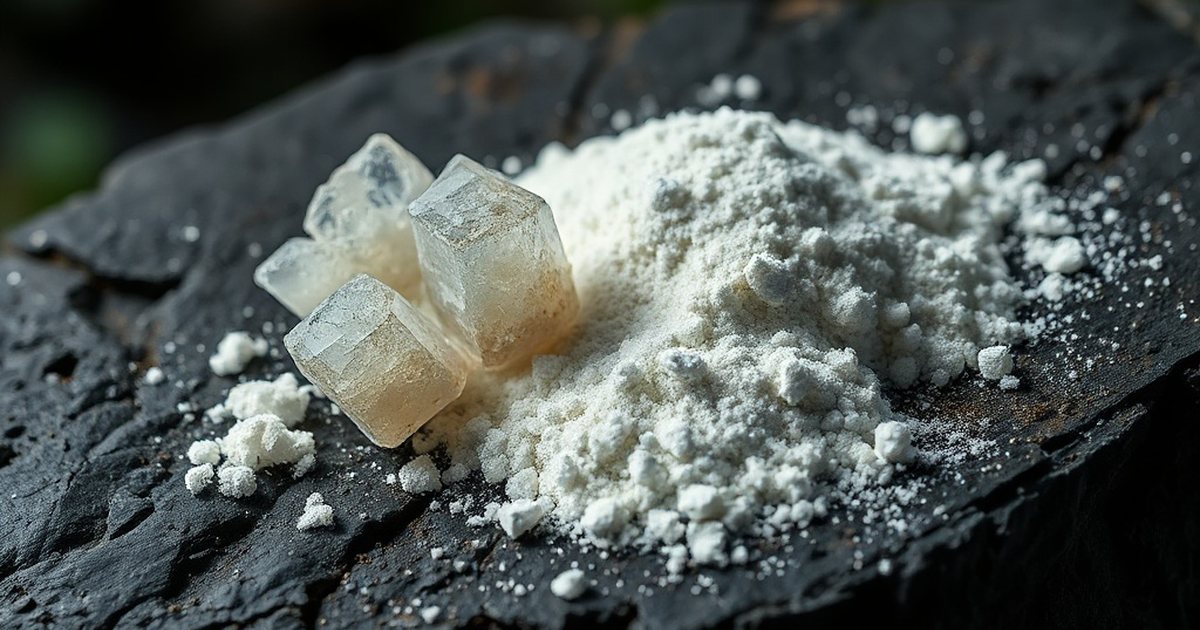
Zeolitic Imidazolate Frameworks (ZIFs) are a class of synthetic, lab-engineered metal-organic frameworks. They are called “zeolitic” because their crystal topology resembles natural zeolite’s porous cage structure, but they are built from metal ions (commonly zinc) linked by imidazolate organic molecules — a completely different chemical composition from clinoptilolite, which is a naturally occurring aluminosilicate mineral formed from volcanic ash. ZIF-8 is manufactured in a lab for specific industrial adsorption applications; it is not mined, not the same substance sold in zeolite supplement capsules, and not something intended for ingestion. Citing a ZIF-8 study as evidence for a clinoptilolite supplement’s glyphosate-binding ability is comparing two materials that happen to share part of a name.

Does Ion Exchange Even Apply to Glyphosate?
Zeolite’s heavy-metal binding reputation rests on ion exchange: its lattice’s negatively charged sites attract and trap positively charged metal cations like lead or cadmium. Glyphosate is a different kind of molecule — an organophosphonate compound with its own metal-chelating properties, meaning it’s actually known for binding metals itself, including in soil chemistry, which is one reason it’s persistent in some agricultural environments. Whether clinoptilolite’s ion-exchange sites have any meaningful affinity for an organophosphonate molecule the size and shape of glyphosate has not been tested, and the mechanism that works for cationic heavy metals doesn’t automatically extend to it.
What Actually Reduces Glyphosate Exposure
For anyone genuinely concerned about glyphosate exposure, the most evidence-backed levers are exposure-reduction choices rather than a binder supplement: choosing organic produce where glyphosate use is restricted, washing produce, and being aware of which crops (wheat, oats, legumes) are more commonly pre-harvest treated with glyphosate as a desiccant. No supplement, including zeolite, activated charcoal, or chlorella, has published human trial evidence showing it reduces glyphosate absorption or accelerates its clearance from the body.
A Note on the Evidence
This article is informational, not medical advice. No published research has evaluated natural zeolite (clinoptilolite) for glyphosate binding in water, soil, or the human body. The glyphosate-water study cited here used a chemically distinct synthetic material (ZIF-8), not the mineral sold in zeolite supplements.
Frequently Asked Questions
Does zeolite bind glyphosate?
There is no published research testing whether natural clinoptilolite zeolite binds glyphosate. The one glyphosate-adsorption study using a “zeolitic” material tested ZIF-8, a synthetic metal-organic framework, not the natural mineral sold in supplements [1].
What is ZIF-8 and is it the same as zeolite?
ZIF-8 is a Zeolitic Imidazolate Framework, a lab-synthesized material built from zinc ions and organic linkers. It shares a porous cage structure and naming convention with natural zeolite but is chemically a different substance, not mined and not sold in supplement form.
Is glyphosate exposure actually harmful?
Research on glyphosate’s health effects is active and mixed, with some studies finding neurotoxic or other effects in experimental and epidemiological research [2], while the European Union’s most recent regulatory peer review sets out the endpoints considered reliable for risk assessment and reports both missing information and concerns where it identified them [5].
What can I do if I want to reduce glyphosate exposure?
Choosing organic produce, washing produce thoroughly, and being aware of pre-harvest desiccant use on certain grains and legumes are the exposure-reduction approaches with the most support. No supplement has published human evidence for reducing glyphosate body burden.


References
- Pelisser C et al. ACS Omega (2026). PMID 41939300
- Costas-Ferreira C et al. Int J Mol Sci (2022). PMID 35562999
- Agostini LP et al. Sci Total Environ (2020). PMID 31972943
- Martins-Gomes C et al. J Xenobiot (2022). PMID 35076536
- EFSA. Peer review of the pesticide risk assessment of the active substance glyphosate. EFSA J (2023). PMID 37502013
- Retraction notice: safety evaluation and risk assessment of the herbicide Roundup and its active ingredient, glyphosate, for humans. Regul Toxicol Pharmacol (2025). PMID 41428335
- Retraction of the landmark glyphosate safety publication by Williams, Kroes and Munro (2000) should be reversed. EXCLI J (2026). PMID 42517087
These statements have not been evaluated by the Food and Drug Administration. This information is not intended to diagnose, treat, cure, or prevent any disease. Content is for informational purposes only and is not medical advice; consult a qualified healthcare provider before starting any supplement. As an Amazon Associate we earn from qualifying purchases.
