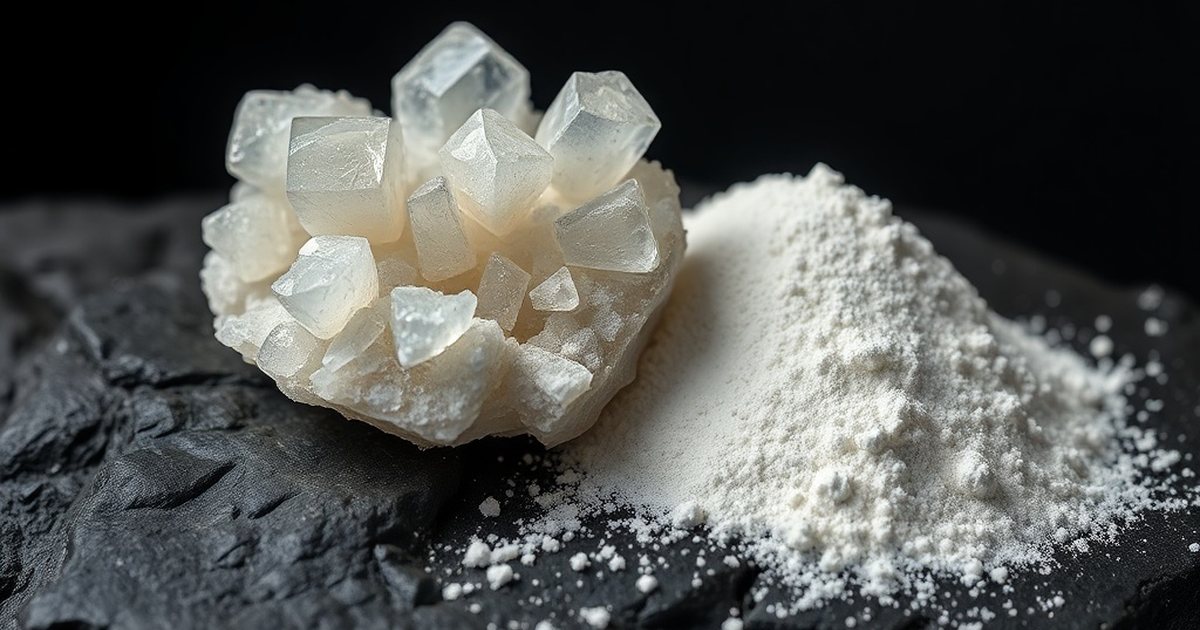
Clinoptilolite zeolite and EDTA chelation therapy represent two fundamentally different approaches to addressing heavy metal body burden. Zeolite is a naturally occurring aluminosilicate mineral with a cage-like crystal lattice that binds cations — including some heavy metal ions and ammonium — in the gastrointestinal tract via ion exchange and adsorption. It is sold as a dietary supplement in micronized powder, liquid suspension, or capsule form for gut and detox support.
EDTA (ethylenediaminetetraacetic acid) chelation therapy, by contrast, is an intravenous (or sometimes oral) pharmaceutical intervention that systemically chelates divalent and trivalent metal ions throughout the body. Its calcium disodium form is FDA-approved specifically for lead poisoning and lead encephalopathy, in both children and adults, rather than for metal toxicity in general, and it is also used off-label for broader “detox” purposes.[1] This article compares the mechanisms, evidence base, safety profiles, and practical considerations of each approach.
Key Takeaways
- Zeolite acts only in the gut via ion exchange/adsorption; it is not systemically absorbed and has no proven effect on total body heavy metal burden in humans.
- EDTA chelation is a medical intervention for diagnosed metal poisoning, not a general wellness detox; it carries real risks (hypocalcemia, nephrotoxicity, mineral depletion) and requires medical supervision.
- No large human trials support either approach for asymptomatic “detox” or chronic low-level exposure; evidence for zeolite is limited to small gut/immune marker studies.
- Zeolite quality varies by mine and processing — third-party COAs for heavy metal contaminants are non-negotiable for any product you consider.
- Diagnosis of metal toxicity should rely on validated tests (blood, urine) interpreted by a qualified clinician, not provoked urine challenges or symptom checklists.
Mechanism of Action: Gut-Limited Binding vs. Systemic Chelation
Clinoptilolite’s structure consists of a negatively charged aluminosilicate framework with exchangeable cations (typically sodium, potassium, calcium) occupying channels and cages. In the gut lumen, it can exchange these benign cations for heavier, more strongly attracted metal ions such as lead, cadmium, arsenic, and mercury, as well as ammonium. Because zeolite is not systemically absorbed in meaningful amounts, its action remains confined to the gastrointestinal tract — it may reduce dietary absorption of metals and promote fecal excretion of metals already secreted into bile or sloughed from the gut lining.
EDTA, administered intravenously, enters systemic circulation and forms stable, water-soluble complexes with metal ions in blood and extracellular fluid. These complexes are then renally excreted. EDTA has high affinity for lead, cadmium, and several other divalent metals, but also chelates essential minerals such as calcium, zinc, and magnesium, necessitating monitoring and repletion. Oral EDTA formulations exist but have very low bioavailability (typically <5%), limiting systemic chelation capacity compared to IV administration.
Clinical Evidence: What Human Studies Show
Clinical evidence for clinoptilolite in humans is limited to small trials examining gut and immune markers — such as intestinal permeability, oxidative stress, and inflammatory cytokines — rather than whole-body heavy metal detoxification or clinical outcomes like reduced blood lead levels. No large, randomized controlled trials have demonstrated that oral zeolite lowers total body burden of heavy metals or improves clinical endpoints in metal-exposed populations.

EDTA chelation has a more established evidence base for acute, diagnosed heavy metal poisoning (particularly lead), where it is a standard-of-care intervention with defined protocols and monitoring. The TACT (Trial to Assess Chelation Therapy) trial investigated EDTA for cardiovascular disease in post-MI patients, not for general heavy metal detoxification, and reported an 18% reduction in cardiovascular events in 2013.[2] That result did not replicate. TACT2, published in JAMA in 2024, randomized 959 post-MI patients with diabetes, the group in which the original benefit had looked largest, and found none: a primary end point event occurred in 35.6% of the chelation group against 35.7% of the placebo group, even though the infusions clearly did lower blood lead.[3] For asymptomatic or low-level chronic exposure, evidence supporting routine EDTA chelation is insufficient, and major medical societies do not endorse it outside of diagnosed toxicity.
Safety Profiles and Monitoring Requirements
Oral clinoptilolite is generally well tolerated at typical supplement doses, with reported side effects limited to mild gastrointestinal symptoms (constipation, nausea). However, because zeolite is a mined mineral, contamination with lead, arsenic, aluminum, and other heavy metals varies by source and processing. Third-party certificates of analysis (COAs) verifying low contaminant levels are essential — more so than for most supplements — since a contaminated product could add to the very burden it is meant to reduce. Long-term safety data are lacking.
IV EDTA carries more significant risks: hypocalcemia (potentially fatal if infusion is too rapid), nephrotoxicity, hypotension, hypoglycemia, and depletion of essential trace minerals (zinc, copper, manganese). It requires intravenous access, medical supervision, renal function monitoring, and mineral repletion protocols. Oral EDTA avoids IV risks but has minimal systemic absorption, making it ineffective for systemic chelation. Both approaches can interact with medications by binding them in the gut (zeolite) or altering mineral status (EDTA).
Regulatory Status and Quality Assurance
The FDA has not evaluated zeolite for any health claim. It is marketed as a dietary supplement under DSHEA, meaning manufacturers cannot legally claim it treats, prevents, or cures any disease — including heavy metal toxicity. Product quality is not standardized; particle size (micronization), purity, and contaminant levels differ widely between brands. Consumers should request and verify third-party COAs for each lot, confirming heavy metal limits well below daily exposure thresholds.
EDTA calcium disodium (CaNa2EDTA) is an FDA-approved drug for lead encephalopathy and lead poisoning with specific dosing guidelines, and its own label warns that chelation should not replace effective measures to eliminate or reduce further exposure to lead.[1] Its use is regulated, compounded, and administered under medical licensure. Off-label use for “detox” or cardiovascular purposes falls outside approved indications. Patients considering EDTA should seek evaluation by a clinician experienced in toxicology or chelation protocols, not rely on wellness clinics offering it as a routine service without diagnostic confirmation of metal toxicity.

Practical Considerations: When Each Might Be Relevant
Oral zeolite may have a niche role as a gut binder to reduce absorption of dietary heavy metals (e.g., from contaminated food, water, or occupational exposure) or to intercept metals undergoing enterohepatic recirculation. It does not replace medical evaluation for symptomatic toxicity. Individuals with high occupational or environmental exposure should prioritize source reduction, proper PPE, and biomonitoring (blood, urine) over self-directed supplementation.
IV EDTA is indicated for confirmed, clinically significant metal poisoning diagnosed via validated testing, and the adult threshold is much higher than the figure usually quoted online. The widely repeated 45 µg/dL cut-off is a pediatric threshold: the American Academy of Pediatrics advises that treatment begin in children when blood lead exceeds 45 µg/dL and the exposure has been controlled.[4] For adults, the expert panel that wrote the medical management guidance concluded that chelation may have an adjunctive role only in highly exposed adults with symptomatic lead intoxication, and is not recommended for asymptomatic individuals with low blood lead concentrations; below that, the intervention is removal from exposure, advised after a single blood lead above 30 µg/dL or two readings of 20 µg/dL or more four weeks apart.[5] Symptoms, not a number alone, are what move an adult case toward chelation. It is not a wellness intervention. Provoked urine testing (post-chelation challenge) is not validated for diagnosis and can overestimate body burden, leading to unnecessary treatment. Decisions about chelation should be made by a qualified toxicologist or occupational/environmental medicine physician.
Cost, Access, and Patient Burden
Zeolite supplements cost roughly $20–$60 per month, are widely available online and in health food stores, and require no medical visits. The burden is low, but so is the evidence for systemic benefit. Quality verification (COAs) adds effort for the consumer.
IV EDTA chelation typically costs $100–$300 per session, with courses of 20–40 sessions sometimes recommended in off-label protocols, totaling thousands of dollars. It requires repeated clinic visits, IV access, lab monitoring, and time off work. Insurance covers it only for FDA-approved indications (e.g., lead poisoning). Oral EDTA products are cheaper but lack evidence for systemic effect.

🛒 Where to Buy Zeolite (Clinoptilolite)
- CleanseParasites Heavy Metal + Microplastics Binder Editor’s Pick
Contains zeolite alongside milk thistle, spirulina, and other binder herbs. - Touchstone Essentials Pure Body Extra Strength ZeoliteLab-tested / studied
liquid, 1 tbsp (15 mL) — Best-known liquid nano-zeolite brand; MLM pricing but widely trusted in alt-health community, publishes third-party lab testing - BodyBio Zeolite Powder
powder, 1/2 tsp — Practitioner-oriented brand, micronized clinoptilolite powder with published COA - Pure Zeolite Zeolite Powder (Ultimate Detox Clay)
powder, 1/4-1 tsp — Budget-friendly micronized powder, third-party heavy metal tested - Zeo Health ZeoCharge
powder, 1/2 tsp — Long-standing niche zeolite brand, ultra-fine micronized clinoptilolite
As an Amazon Associate we earn from qualifying purchases. Quality varies widely — always choose a product with a published third-party test (COA) before buying.
A Note on the Evidence
This article is informational, not medical advice. The FDA has not evaluated zeolite for any health claim. Clinical evidence for zeolite in humans is limited to small trials on gut/immune markers, not whole-body heavy metal detoxification. EDTA chelation carries serious risks and should only be used under medical supervision for diagnosed metal toxicity. Consult a qualified healthcare provider before starting any supplement or chelation regimen.
Frequently Asked Questions
Can zeolite remove heavy metals already stored in my tissues?
No. Zeolite is not systemically absorbed; it remains in the gastrointestinal tract and can only bind metals present in the gut lumen (from diet, bile, or sloughed cells). It does not mobilize metals from bone, brain, or other tissues.
Is oral EDTA an effective alternative to IV chelation?
Oral EDTA has very low bioavailability (<5%), so it does not achieve meaningful systemic chelation. It may act as a gut binder like zeolite, but evidence for this use is minimal.

How do I know if I actually need chelation therapy?
Chelation is indicated only for confirmed, clinically significant metal poisoning diagnosed via validated blood or urine tests (not provoked challenge tests) by a qualified clinician. Self-diagnosis or wellness screening is not sufficient.
What should I look for on a zeolite certificate of analysis?
A lot-specific COA from an ISO-accredited lab showing heavy metal limits (lead, arsenic, cadmium, mercury, aluminum) well below daily exposure thresholds (e.g., lead <0.5 µg/day per serving), plus microbial limits and particle size verification.
Can I take zeolite with my medications or other supplements?
Zeolite can bind cations in the gut, potentially reducing absorption of medications (thyroid hormone, antibiotics, etc.) and mineral supplements. Separate dosing by at least 2 hours and consult your pharmacist or physician.
Are there any populations who should avoid zeolite or EDTA?
Pregnant/lactating women, children, people with kidney disease, severe GI obstruction, or on critical narrow-therapeutic-index medications should avoid zeolite unless directed by a physician. EDTA is contraindicated in renal impairment, hypocalcemia, and certain other conditions — it requires full medical evaluation.
References
- Edetate Calcium Disodium Injection, USP – prescribing information. DailyMed, U.S. National Library of Medicine. DailyMed label
- Lamas GA, Goertz C, Boineau R, et al. Effect of disodium EDTA chelation regimen on cardiovascular events in patients with previous myocardial infarction: the TACT randomized trial. JAMA. 2013;309(12):1241–1250. PMID 23532240
- Lamas GA, Anstrom KJ, Navas-Acien A, et al. Edetate disodium-based chelation for patients with a previous myocardial infarction and diabetes: the TACT2 randomized clinical trial. JAMA. 2024;332(10):794–803. PMID 39141382
- American Academy of Pediatrics. Treatment of Lead Poisoning. aap.org
- Kosnett MJ, Wedeen RP, Rothenberg SJ, et al. Recommendations for medical management of adult lead exposure. Environ Health Perspect. 2007;115(3):463–471. PMID 17431500
These statements have not been evaluated by the Food and Drug Administration. This information is not intended to diagnose, treat, cure, or prevent any disease. Content is for informational purposes only and is not medical advice; consult a qualified healthcare provider before starting any supplement. As an Amazon Associate we earn from qualifying purchases.