If you’ve shopped for zeolite (clinoptilolite) supplements, you’ve probably seen big claims about particle size: ‘3 micron,’ ‘sub-micron,’ ‘nano-sized for maximum absorption.’ The pitch is simple: smaller particles mean better bioavailability and stronger detox effects. The problem is that most of this messaging comes from marketing copy, not from published human research on zeolite dosing or pharmacokinetics.
This article breaks down what particle size and micron ratings actually describe, why smaller isn’t automatically better (or even meaningfully different) for a mineral that works mostly through surface ion exchange rather than systemic absorption, and what questions are actually worth asking before you buy. This is informational, not medical advice, and it should not replace guidance from your doctor.
Key Takeaways
- Micron rating describes the milled particle size of the powder, not the size of the molecular pores that do the actual ion exchange.
- Finer grinding increases surface area in principle, but no cited human trial data ties a specific micron size to a specific clinical outcome.
- Ultra-fine isn’t automatically better or safer; it’s a manufacturing choice, not a proven efficacy upgrade.
- Source and third-party heavy metal testing (via a current COA) matter more for safety than the micron number on the label.
- The FDA has not evaluated zeolite for any health claim, including particle-size-based efficacy claims.
What a Micron Rating Actually Describes
A micron (micrometer) is a unit of length equal to one-millionth of a meter. When a zeolite product lists a micron rating, it’s describing the average or maximum diameter of the powder particles after milling, not the size of the crystal’s internal cage structure, and not a measure of purity or potency. A ‘3-micron’ powder simply means most particles are ground down to roughly that size or smaller, similar to how flour or talc are milled to a target fineness.
It’s worth separating two things that marketing often blurs together: the micron size of the milled powder (a physical, measurable property) and the molecular-scale pore openings within the zeolite’s aluminosilicate cage (roughly 4 angstroms, thousands of times smaller than a micron). Milling a particle down to a few microns does not change the size of those internal channels, so ‘micronized‘ and ‘the pores that do the ion exchange’ are not the same claim, even though ads sometimes imply they are.
The Marketing Claim vs. What's Actually Tested
The common sales pitch is that smaller particles mean more surface area, more surface area means more binding capacity, and more binding capacity means better detox or gut effects in the body. The surface-area logic is true as a matter of basic materials science, grinding any solid finer increases its total surface area. What’s missing is direct human evidence connecting a specific micron size to a specific clinical outcome (symptom improvement, measurable toxin reduction, or gut marker change) at that particle size versus a coarser one.

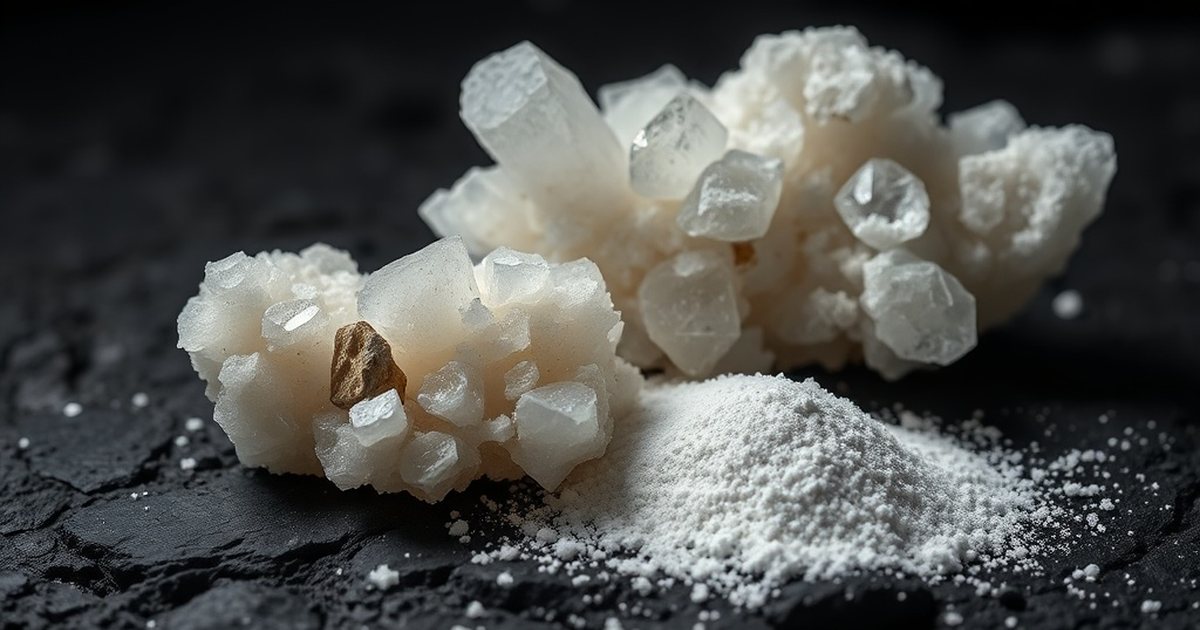
Because clinoptilolite is a mined, insoluble mineral, its activity in the gut is generally understood to happen through surface contact and ion exchange as it passes through the digestive tract, not through the particle dissolving and being absorbed into the bloodstream the way a vitamin or drug might be. That reasoning has actually been put to the test, though in animals rather than people. Researchers made two purified clinoptilolite preparations differing about tenfold in particle size — a standard powder at 3.6 µm and a microparticulate fraction at 0.39 µm — and compared them head to head in mice with chemically induced colitis. The finer preparation did outperform the coarser one, and matched the reference drug[1]. So the surface-area argument is not empty. What is still missing is the step that would matter to a shopper: no controlled human trial has linked a specific micron rating on a label to a specific clinical outcome, and a colitis model in mice does not transfer to a healthy adult taking a daily scoop.
Why Finer Isn't Automatically Safer or Better
The most common worry about ‘nano’ framing — that particles small enough to be milled that fine might cross the gut wall and enter the body — has been examined directly. In the same study, mice were put through four cycles of exposure and their gut tissue and livers inspected by transmission electron microscopy: no clinoptilolite particle was found in the intestinal epithelial layer, in gut-associated lymph follicles, or in the liver, at the 0.39 µm size[1]. On that evidence the mineral stays in the lumen and leaves, which is what the surface-contact model predicts. Finer grinding is still not a free upgrade. Very fine mineral powders can be harder to suspend evenly in liquid, can behave differently in the gut in ways that aren’t fully characterized, and in industrial contexts, ultra-fine mineral dust raises separate inhalation safety questions during manufacturing (a workplace concern, not a claim about swallowing a capsule). None of that means finer zeolite powder is dangerous to take as directed, but it does mean ‘smaller equals strictly better’ is a marketing simplification rather than a settled scientific conclusion.
There’s also a practical tradeoff worth naming plainly: micron rating is one variable a company can control and advertise, while sourcing and contamination screening is a separate variable that matters more for safety and is harder to verify from a label alone.
The Variable That Matters More Than Micron Size: Source and Contamination
Clinoptilolite is a naturally occurring mined mineral, and its trace element content depends entirely on the deposit it came from and how it was processed. Because the same ion-exchange properties that let zeolite bind ammonium and some heavy metal cations also mean the raw ore itself can carry lead or other heavy metals depending on the mine, a fine micron rating tells you nothing about whether the specific batch was tested and came back clean.

A product can be milled to an impressively small particle size and still carry more contamination risk than a coarser product from a well-screened source, or vice versa. If you’re evaluating zeolite products, a current, batch-specific third-party certificate of analysis (COA) showing heavy metal testing is a more actionable data point than the micron number on the front of the label.
What the FDA and Regulatory Status Actually Say
The FDA has not evaluated zeolite, at any particle size, for detoxification, immune support, or any other health claim made on supplement labels. It’s sold and regulated as a dietary supplement, not a drug, which means manufacturers are not required to prove a specific micron size produces a specific health effect before selling the product. Any micron-related efficacy claim you see on a label or in ad copy is a marketing statement, not a regulatory-approved one.
This regulatory gap is exactly why particle-size marketing tends to fill the space with confident-sounding but unverified claims, there’s no requirement to back them with data before going to market.
Practical Questions to Ask Before Buying
Instead of chasing the smallest micron number on the shelf, it’s more useful to ask: does the company publish a current, batch-specific COA testing for heavy metals (including lead)? Is the mining source disclosed? Is the micron figure paired with any actual testing data, or is it just a number on a label? A company that’s transparent about sourcing and third-party testing but vague on exact micron size is generally a better sign than one that leads with a micron claim and says little about contaminant screening.
🛒 Where to Buy Zeolite (Clinoptilolite)

- CleanseParasites Heavy Metal + Microplastics Binder Editor’s Pick
Contains zeolite alongside milk thistle, spirulina, and other binder herbs. - Touchstone Essentials Pure Body Extra Strength Zeolite
liquid, 1 tbsp (15 mL) — Best-known liquid nano-zeolite brand; MLM pricing but widely trusted in alt-health community - BodyBio Zeolite Powder
powder, 1/2 tsp — Practitioner-oriented brand, micronized clinoptilolite powder - Pure Zeolite Zeolite Powder (Ultimate Detox Clay)
powder, 1/4-1 tsp — Budget-friendly micronized powder - Zeo Health ZeoCharge
powder, 1/2 tsp — Long-standing niche zeolite brand, ultra-fine micronized clinoptilolite
As an Amazon Associate we earn from qualifying purchases. Quality varies widely — always choose a product with a published third-party test (COA) before buying.
A Note on the Evidence
The particle-size comparison and the systemic-uptake check cited here come from a mouse model of colitis, not from human trials, and they tested two specific purified preparations rather than retail powders in general. No study establishes that a particular micron rating on a retail label produces a particular effect in people. Clinical evidence on zeolite in humans is limited and this is not medical advice, talk to a doctor before starting any new supplement, especially if you have kidney disease or take other medications.
Frequently Asked Questions
Does a smaller micron size mean zeolite works faster or better?
Not necessarily. Smaller particles do have more total surface area, but there’s no cited human research establishing that a specific micron size produces a stronger or faster effect than a coarser one. Treat ‘faster-acting’ claims tied to micron size as marketing language rather than established fact.
What's the difference between 'micronized' and the zeolite's molecular pore size?
Micronized describes how finely the powder was milled, typically measured in whole microns. The zeolite’s internal cage pores, where ion exchange happens, are on the angstrom scale, thousands of times smaller and unaffected by how fine the powder is milled.

Is nano-sized or sub-micron zeolite safer than standard micronized zeolite?
There isn’t published human data establishing that sub-micron zeolite is safer or more effective for oral use. Very fine mineral powders raise their own handling and characterization questions, so ‘smaller’ shouldn’t be assumed to automatically mean ‘safer.’
What should I actually check on a zeolite product label?
Prioritize a current, batch-specific third-party certificate of analysis showing heavy metal testing (especially lead), disclosed sourcing, and clear manufacturing practices over the micron number alone. A precise-sounding micron figure with no contaminant testing data is a red flag, not a reassurance.
Has the FDA approved any zeolite particle size for detox claims?
No. The FDA has not evaluated zeolite, at any micron size, for detoxification or any other health claim. It is regulated as a dietary supplement, and marketing claims about particle size and efficacy are not FDA-reviewed.
Should I talk to a doctor before trying zeolite supplements?
Yes, especially if you have kidney issues, are pregnant or breastfeeding, take other medications, or have a condition affecting mineral or electrolyte balance. Clinical evidence in humans is limited to small trials on gut and immune markers, not whole-body heavy-metal detoxification, so it’s worth discussing realistic expectations with a healthcare provider first.
References
- Nizet S et al. Clinoptilolite in Dextran Sulphate Sodium-Induced Murine Colitis: Efficacy and Safety of a Microparticulate Preparation. Inflammatory bowel diseases (2017). PMID 29272495
These statements have not been evaluated by the Food and Drug Administration. This information is not intended to diagnose, treat, cure, or prevent any disease. Content is for informational purposes only and is not medical advice; consult a qualified healthcare provider before starting any supplement. As an Amazon Associate we earn from qualifying purchases.